France Gripped by Widespread Unrest as Paris Extends Curfew, Major Cities Ban Protests and Thousands Face Arrest

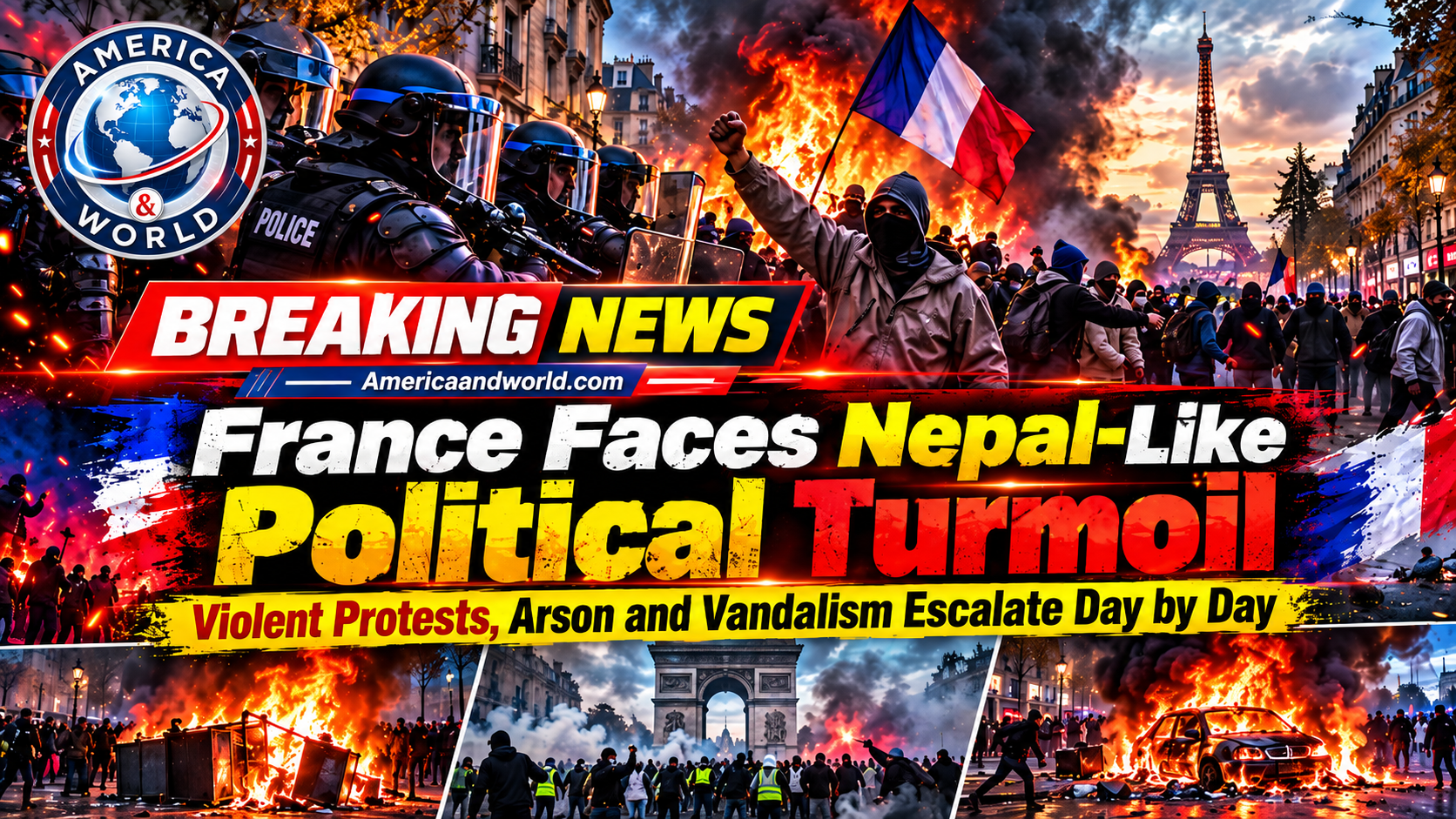
PARIS, France, October 22, 2026 — France is facing a deepening wave of social and political unrest as nationwide demonstrations over soaring living costs, rising fuel prices, education concerns and public services increasingly give way to violent clashes, arson, looting and widespread destruction.
French authorities have intensified security operations across the country, extending nighttime curfews in parts of Paris and imposing sweeping restrictions on demonstrations in Marseille, Lyon and several other cities ahead of another anticipated weekend of protests.
In the capital, restrictions covering the historic Place de la République and the busy Les Halles commercial district have been extended through Monday. Movement in these areas will be restricted between 11 p.m. and 6 a.m. as authorities attempt to prevent renewed violence.
Security concerns have also prompted plans to close several of Paris’s internationally renowned cultural institutions, including the Louvre, Musée d’Orsay and Picasso Museum, on Saturday.
The measures follow a turbulent weekend that saw an estimated 550,000 demonstrators take to the streets across France on October 17. While many rallies began peacefully, scenes of violence quickly overshadowed the demonstrations in several major cities.
Masked groups set fires, vandalized public property, damaged businesses and confronted police. Vehicles and barricades were burned in the streets, leaving several urban areas resembling scenes of widespread civil disorder.
Marseille was among the hardest-hit cities, with more than 500 businesses reportedly affected by vandalism, damage and looting. In Lyon, the city’s tourism office was set ablaze, while the historic city hall in Limoges suffered extensive fire damage, including serious destruction to its roof and clock tower.
Paris also experienced significant disturbances, particularly around Place de la République, where confrontations between protesters and security forces disrupted public life.
According to figures released by French authorities, approximately 2,700 people have been arrested nationwide in connection with the unrest. More than 1,000 suspects have appeared before courts, while 217 individuals have reportedly received prison sentences through expedited judicial proceedings.
Officials indicated that nearly half of those detained had no previous criminal record, highlighting the broad range of people caught up in the disturbances.
President Emmanuel Macron has condemned the violence, emphasizing that citizens have the democratic right to protest peacefully but warning that attacks on public institutions, businesses and law enforcement will not be tolerated.
Macron has also accused elements of the far left of attempting to exploit public frustration to destabilize the French Republic. Protest organizers, however, insist that the movement is rooted in legitimate grievances over economic inequality, inflation, education and government policies.
Prime Minister Sébastien Lecornu has promised a substantial security response, with additional police officers and specialized units expected to be deployed ahead of Saturday’s demonstrations.
Authorities have indicated that authorized trade union marches may proceed along designated routes, while other gatherings considered likely to trigger violence could face prohibition.
Supporters of the Yellow Vest movement, student organizations and labor unions remain at the center of the demonstrations, reflecting mounting dissatisfaction with the country’s economic and political direction.
The unrest comes at a particularly sensitive moment for Macron’s administration as France approaches its 2027 presidential election, with voting scheduled for April and May.
What began as widespread frustration over living expenses and public services has evolved into a broader challenge to the government’s ability to maintain public order while respecting democratic freedoms.
France now faces a difficult balancing act: protecting the right to peaceful protest, confronting violent groups and responding to the economic grievances fueling public anger.
With another major round of demonstrations expected, the coming days could prove crucial in determining whether France moves toward stability or experiences a further escalation of its political and social crisis.