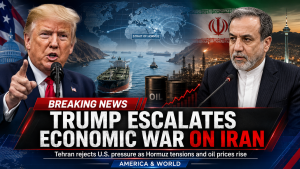
Iran Warns of ‘New Weapons’ as Nuclear Treaty Exit Push, Hormuz Crisis and Yemen Fighting Raise Regional Stakes


TEHRAN/NEW YORK/SANAA, Sept. 21, 2026 / Iran has warned that it could deploy previously unseen weapons and expand the geographical scope of its military response if the United States launches another major attack, as Iranian lawmakers push an emergency proposal to withdraw from the Nuclear Non-Proliferation Treaty and fighting in Yemen deepens an already volatile regional crisis.
A spokesman for Iran’s Islamic Revolutionary Guard Corps, Hossein Mohebbi, said Tehran would make “significant changes” to both its defensive and counteroffensive operations in the event of renewed U.S. military action. He said Iran would introduce weapons with capabilities not previously used and strike targets that had not been attacked in earlier rounds of fighting. Iran has not publicly disclosed what those weapons are, and the claims about their capabilities cannot be independently verified. Reuters separately confirmed that the Revolutionary Guards had threatened to use new weapons and target previously untouched locations if Washington launched another offensive.
The warning comes as pressure grows inside Iran’s parliament to take a potentially far-reaching step on the country’s nuclear policy. Lawmaker Hossein-Ali Haji Deligani said a “triple-urgency” bill seeking Iran’s withdrawal from the Nuclear Non-Proliferation Treaty, or NPT, has been submitted to parliament’s presiding board and is awaiting approval from Speaker Mohammad Bagher Ghalibaf before it can be brought to the floor for debate. The proposal has not yet been passed, meaning Iran has not formally withdrawn from the treaty.
Under Article X of the NPT, a member state may withdraw if it determines that extraordinary events have jeopardized its “supreme interests,” but it must give the other treaty members and the UN Security Council three months’ notice and explain the circumstances behind its decision.
Iran continues to say that its nuclear program is not aimed at producing nuclear weapons. At the same time, the parliamentary push reflects growing anger in Tehran over attacks on Iranian nuclear facilities and renewed international pressure over its nuclear activities.
The military and nuclear warnings are unfolding alongside a continuing crisis in the Strait of Hormuz, one of the world’s most important energy corridors. Shipping data cited by Reuters showed that only 17 trackable commodity vessels crossed the strait over the weekend, down from 37 the previous weekend. Before the U.S.-Israeli war with Iran began on February 28, about 125 large commercial ships typically passed through the waterway each day. Some tankers may be moving with tracking systems switched off, meaning visible traffic does not capture every transit, but the recorded numbers remain far below normal levels.
The disruption is particularly important because the Strait of Hormuz carried about one-fifth of global oil and liquefied natural gas flows before the conflict. Saudi Arabia has recently increased crude exports through Hormuz after attacks on its East-West pipeline disrupted an alternative route to the Red Sea. Reuters reported that 22 tankers carrying about 42 million barrels of crude exited the strait during the week beginning September 13.
Meanwhile, Yemen has again become a major battlefield in the wider regional confrontation.
Four people were reported killed and three wounded in Yemen’s northern Al-Jawf province after airstrikes hit telecommunications towers in Khabb wa ash Sha’af district. Houthi-run media blamed Saudi Arabia and said the victims were workers at the facilities. Saudi authorities had not immediately commented, and the casualty claims had not been independently verified.
Fighting between the Iran-aligned Houthis and forces linked to Yemen’s internationally recognized, Saudi-backed government has expanded across Taiz and other provinces after years in which front lines had been comparatively quieter following the 2022 UN-mediated truce.
The renewed warfare is producing another major displacement emergency in a country already devastated by more than a decade of conflict. The UN’s International Organization for Migration said at least 112,000 people had recently been displaced inside Yemen, while nearly 3,000 had crossed by sea to Djibouti. Reuters reported that many families had fled with few possessions as fighting intensified along the Red Sea coast and around Taiz.
Earlier figures from Yemeni authorities documented 86,415 displaced people across six governorates, with Taiz recording the largest share. More than 50,000 of those people were listed as displaced in Taiz alone, underscoring the extraordinary pressure on communities already struggling with shortages of shelter, food, drinking water, healthcare and sanitation.
Many of the displaced have been forced from their homes more than once during Yemen’s long conflict. Camps and reception areas around Taiz are struggling to absorb new arrivals, including children, women and elderly people, while humanitarian organizations warn that resources are being stretched increasingly thin. Reuters reported that some families have arrived barefoot and with virtually none of their belongings after escaping shelling and rapidly shifting front lines.
Against this military backdrop, Gulf states are intensifying diplomatic efforts as world leaders gather in New York for the 81st United Nations General Assembly. Foreign ministers from the six Gulf Cooperation Council states met on Monday on the sidelines of the UN session to coordinate positions and discuss efforts to reduce regional tensions and strengthen security cooperation.
Qatar’s Prime Minister and Foreign Minister Sheikh Mohammed bin Abdulrahman bin Jassim Al Thani has called for a new regional security framework based on respect for sovereignty and the principle that no state should pose a threat to another. Qatar, which has played a mediating role between Washington and Tehran, said lasting security cannot be built through repeated cycles of military escalation and retaliation.
Financial markets are closely watching whether diplomacy in New York can reduce the risk of further escalation. Brent crude fell about 2 percent to $101.75 a barrel on Monday morning, while the expiring October U.S. West Texas Intermediate contract dropped to $98.34, as investors reacted to hopes for diplomatic movement and signs of recovering Saudi exports. President Donald Trump has said he would be open to meeting Iranian President Masoud Pezeshkian during the UN gathering, while Tehran has communicated conditions for renewed negotiations through mediators.
The simultaneous military threats, nuclear debate, severe disruption to Gulf shipping and renewed Yemen fighting illustrate how closely connected the region’s conflicts have become. While diplomatic contacts are increasing in New York, developments in Tehran, Hormuz and Yemen show that the risk of further escalation remains substantial.