Stop This Crazy War, The World Needs Peace, Not More Destruction

No nation wins when civilians die, economies collapse, human rights disappear and truth becomes another casualty of war
War may begin with missiles, military calculations and political declarations. But it is ordinary people who ultimately receive the bill.
Families bury their loved ones. Children lose parents. Soldiers die far from home. Hospitals struggle to function. Businesses close. Fuel and food prices rise. Journalists risk their lives to tell the world what is happening. Fear crosses borders long before armies do.
The continuing war involving Iran, the United States, Israel and an increasingly unstable Middle East must end.
Enough.
The world does not need another generation raised among missiles, funerals, revenge and hatred. It needs courageous diplomacy, responsible leadership and a return to the fundamental principle that human life has greater value than political pride.
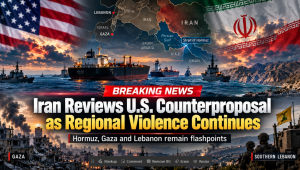
As of August 18, the diplomatic situation has again deteriorated. A 60-day U.S.-Iran arrangement expired without producing the comprehensive settlement that had been hoped for. President Donald Trump has said no new negotiations with Iran are currently planned, while Iranian officials have warned that Tehran could adopt a more offensive military posture if diplomacy fails. The Strait of Hormuz remains at the center of the confrontation, with sharply reduced commercial traffic and competing claims about its status.
This is exactly the moment when leaders should move toward the negotiating table, not away from it.
Stop Before the Point of No Return
Every war begins with arguments explaining why military action is necessary.
Every side describes its actions as justified.
Every government points to the actions of its enemy.
But history repeatedly teaches something else: wars are much easier to start than to control.
One missile invites another. One attack produces retaliation. Retaliation produces counter-retaliation. What starts as a supposedly limited military operation can become a regional catastrophe — and eventually something much larger.
The Middle East already carries too many graves from too many wars.
It does not need more.
The United States, Iran, Israel and every government or armed group involved in this confrontation should understand one simple truth:
Military strength may destroy an enemy’s building. It cannot build lasting peace.
Peace requires negotiation.
Peace requires compromise.
Peace sometimes requires leaders to accept less than they wanted.
That is not weakness. It is statesmanship.
There Is No Victory Over Dead Civilians
Political leaders discuss strategy in secure rooms. Civilians experience strategy through explosions, displacement, shortages and death.
That difference must never be forgotten.
International humanitarian law is not optional. The International Committee of the Red Cross has repeatedly emphasized during this conflict that civilians and civilian objects must be protected, that hospitals, homes and schools must be spared, and that medical personnel, first responders and humanitarian workers must be allowed to perform their duties safely.
The rules must apply to everyone.
Not only to Iran.
Not only to Israel.
Not only to the United States.
Not only to one side’s enemies.
If we believe in human rights, we must believe in them even when the victim carries a different passport, speaks a different language, follows a different religion or lives under a government we oppose.
An Iranian child has the same human value as an American child.
An Israeli mother has the same right to safety as an Iranian mother.
A soldier’s family mourns regardless of the flag covering the coffin.
Humanity cannot survive if we recognize suffering only when it happens to people on “our side.”
Respect Sovereignty, International Law and Human Dignity
A peaceful international order cannot survive if powerful countries decide that military force should replace diplomacy whenever disagreement becomes difficult.
Neither can peace survive when governments threaten neighbors, attack civilians, disrupt international commerce or use armed proxies to spread instability.
Every nation has legitimate security concerns.
Every nation also has obligations.
National security cannot become an unlimited excuse for violating human rights, attacking civilian populations, suppressing dissent or ignoring international law.
The same standards must apply to friends and adversaries alike.
That is what gives international law meaning.
Selective morality is not morality.
Selective human rights are not human rights.
And international rules that apply only to weaker countries are not truly international rules.
The World Economy Is Also Under Attack
The consequences of this war extend far beyond the battlefield.
The Strait of Hormuz is one of the world’s most strategically important energy corridors. Disruption there affects oil markets, transportation costs, manufacturing, agriculture, food prices and household expenses thousands of miles away.
The International Monetary Fund warned earlier this year that the Middle East war was already producing higher commodity prices, stronger inflationary pressure and tighter financial conditions. Its analysis concluded that different escalation scenarios share a common economic direction: higher prices and slower economic growth.
That means a missile launched in the Middle East may eventually appear on a grocery receipt in America.
It may appear in an electricity bill in Europe.
It may increase transportation costs in Asia.
It may raise fertilizer and food prices in Africa.
The poor suffer first and suffer most.
Billions spent destroying bridges, military installations and infrastructure will eventually require billions more to rebuild them.
Imagine what even a fraction of that money could accomplish if invested instead in hospitals, schools, scientific research, clean water, transportation, poverty reduction and economic development.
Human civilization has enough problems without manufacturing new ones through unnecessary war.
Protect Journalists and Protect the Truth
There is another casualty in modern warfare that receives too little attention:
the truth.
Independent journalism becomes even more important during war because governments, militaries, political organizations and social-media networks are all competing to control the narrative.
Journalists must therefore be allowed to work freely and safely.
The Committee to Protect Journalists has documented arrests, intimidation and other restrictions on journalists across the Gulf since the Iran war began. CPJ has also reported severe difficulties caused by internet shutdowns and information restrictions in Iran.
The International Federation of Journalists has similarly warned about restrictions on media activity and access to information during the conflict.
This must stop.
Governments do not own the truth.
Military authorities do not own the truth.
Political leaders do not own the truth.
The public has a right to know what is being done in its name.
Journalists are not enemy combatants because they report uncomfortable facts.
Cameras are not missiles.
Questions are not weapons.
Criticism is not treason.
A free press is particularly essential during war because secrecy can hide mistakes, civilian casualties, abuses of power and violations of human rights.
If democracy and freedom are values worth defending, press freedom must be defended even when reporting causes political embarrassment.
Especially then.
Leaders Must Control Their Words as Well as Their Weapons
The language surrounding this conflict has also become dangerously aggressive.
Threats, humiliation and demands for unconditional submission may energize political supporters, but they make diplomacy more difficult.
The purpose of leadership should not be to prove who can issue the most frightening threat.
A president, prime minister, military commander or supreme leader carries extraordinary responsibility because a few sentences spoken publicly can move markets, frighten millions of people or contribute to military escalation.
Power demands restraint.
The stronger the nation, the greater its responsibility to demonstrate that restraint.
There is no dishonor in talking to an enemy.
Negotiations are conducted precisely because enemies disagree.
If nations waited until they trusted each other before negotiating, most peace agreements in history would never have existed.
We Need a New Diplomatic Offensive
The world now needs an offensive — but not a military one.
It needs a diplomatic offensive for peace.
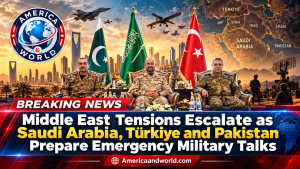
The United Nations, European governments, Gulf states, Pakistan, Oman and other credible intermediaries should intensify efforts to reopen direct or indirect negotiations immediately.
The objectives should include a sustainable ceasefire; protection of civilians and critical infrastructure; secure commercial navigation; serious negotiations over Iran’s nuclear program and regional security; humanitarian access; respect for national sovereignty; protection of journalists and freedom of information; and mechanisms for monitoring and enforcing any agreement.
No agreement will satisfy every party completely.
That is the nature of diplomacy.
A peace agreement in which everyone receives everything they demand is not negotiation. It is surrender by the other side.
Real diplomacy asks governments to choose what is essential and compromise on what is not.
No More Graves for Political Pride
We reject the dangerous idea that calling for peace means supporting Iran, opposing America, opposing Israel or taking sides in the geopolitical struggle.
Peace is not Iranian.
Peace is not American.
Peace is not Israeli.
Peace is human.
One can condemn terrorism and still demand peace.
One can oppose nuclear proliferation and still demand peace.
One can recognize Israel’s right to security and still demand protection for civilians.
One can criticize Iran’s government and still defend the lives and dignity of Iranian people.
One can support American national security while questioning whether endless warfare actually makes Americans safer.
These positions are not contradictory.
They are what responsible citizenship and responsible journalism require.
Save People. Save Economies. Save the Future.
The world has extraordinary scientific and technological capabilities.
Human beings can explore distant planets, perform complex surgery, communicate instantly across continents and build technologies previous generations could scarcely imagine.
Yet we remain frighteningly skilled at killing one another.
That cannot be humanity’s greatest achievement.
Our children deserve something better than inheriting our hatred.
The Iranian people deserve peace.
The Israeli people deserve peace.
The American people deserve peace.
The people of the Gulf and the wider Middle East deserve peace.
Soldiers deserve to return to their families.
Journalists deserve to report without being threatened, imprisoned or killed.
Civilians deserve to sleep without wondering whether the next sound they hear will be a missile.
And the global economy deserves stability rather than being held hostage to perpetual geopolitical confrontation.
The International Committee of the Red Cross warned during this conflict that the humanitarian cost of a region at war is something the world cannot simply absorb and called for a durable ceasefire followed by a political solution.
That message should be heard in Washington.
It should be heard in Tehran.
It should be heard in Jerusalem.
It should be heard in every capital capable of influencing this conflict.
Stop this crazy war.
Put down the threats.
Stop targeting one another.
Protect civilians.
Respect human rights.
Protect journalists and press freedom.
Respect international law.
Reopen diplomacy.
Protect the global economy.
Honor the dignity of every human being.
There will always be another missile.
There will always be another target.
There will always be someone demanding revenge.
The real courage is knowing when to stop.
No more war. Give peace a chance. Save humanity. Save the world.