US Floats NATO Membership for Ukraine in Exchange for Donbas Withdrawal, Zelensky Says: Major Diplomatic Shift in Russia-Ukraine Peace Talks

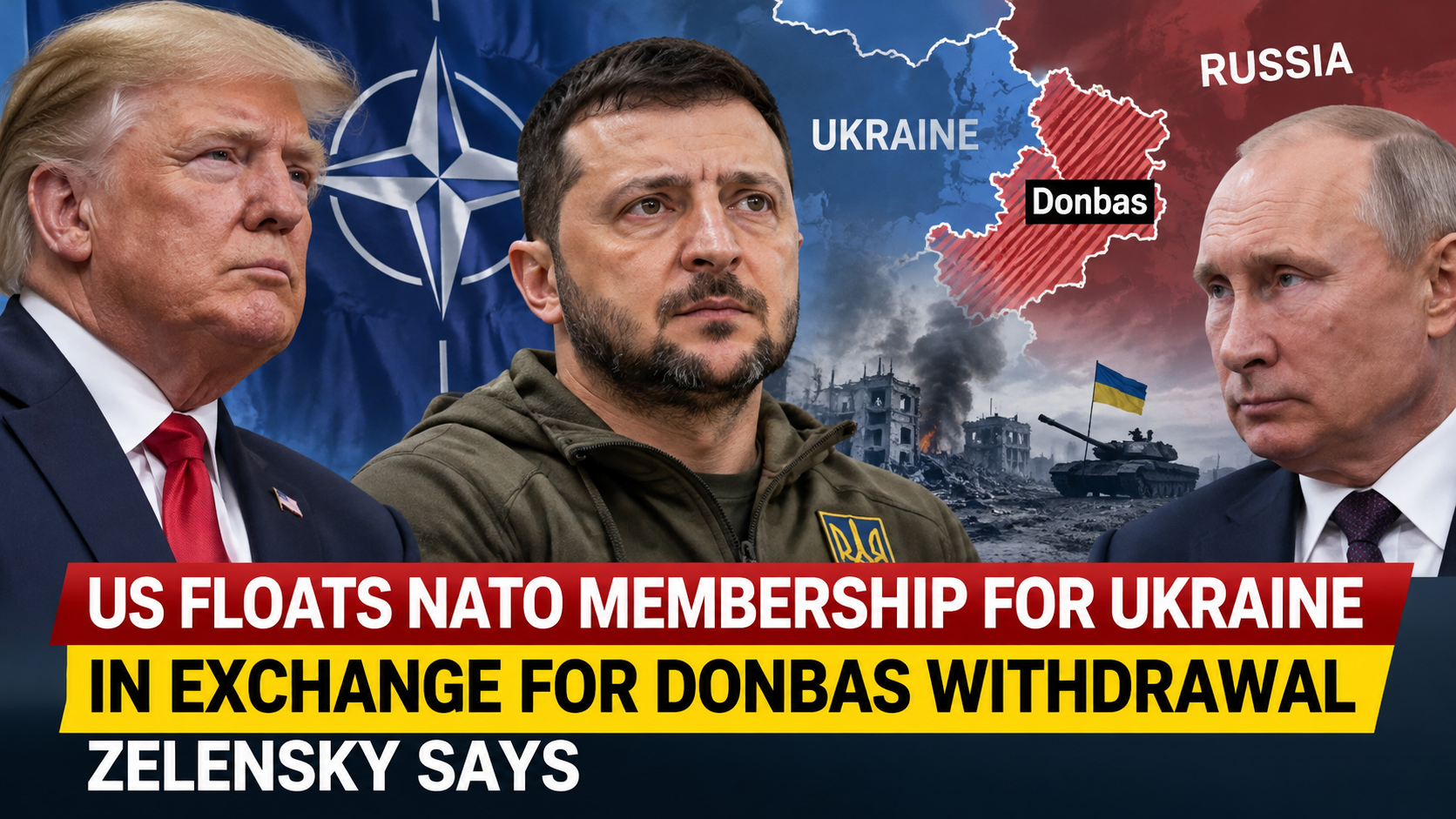
The idea emerged during recent US-brokered negotiations involving Ukraine and Russia, although Washington has not publicly confirmed making a formal proposal. Zelensky described the discussion as unprecedented but emphasized that Ukraine has not agreed to surrender any territory.
“The Americans raised a question: ‘What if Ukraine joins NATO? Would Ukraine withdraw from Donbas?’ This was the first time this had been raised,” Zelensky told reporters in remarks released Saturday.
The Ukrainian president said he would consider putting a comprehensive peace agreement to a national referendum if Western partners offered credible security guarantees, ensured Ukraine could maintain a strong and adequately funded military, and committed financial resources for postwar reconstruction.
However, he stressed that no concrete agreement currently exists and that decisions affecting Ukraine’s sovereignty cannot be made without public participation.
Russia’s Territorial Demands Remain a Major Obstacle
Russia currently occupies approximately one-fifth of Ukrainian territory, including most of the Donbas industrial region, which comprises Donetsk and Luhansk.
Moscow has repeatedly demanded that Ukrainian forces withdraw from the remaining Ukrainian-controlled areas of Donbas, recognize Russian territorial gains, limit Ukraine’s military capabilities and abandon its ambitions to join NATO.
Kyiv has consistently rejected these demands, arguing that territorial concessions without enforceable security guarantees could encourage further Russian aggression.
NATO membership remains particularly contentious. Russia has long opposed Ukraine joining the Western military alliance, while several NATO members have expressed reservations about admitting a country actively engaged in war with Russia.
Any Ukrainian accession would require agreement among NATO’s member states, making the proposal diplomatically complicated even if Washington were to support it.
US-Led Negotiations Continue Without a Breakthrough
The latest developments follow two days of US-mediated talks in Abu Dhabi involving Ukrainian and Russian delegations.
President Donald Trump’s envoys, Steve Witkoff and Jared Kushner, subsequently met Russian President Vladimir Putin in Moscow and Zelensky in Dublin as Washington intensified efforts to secure a negotiated settlement.
Although no major peace agreement emerged, negotiators made progress toward a prisoner exchange potentially involving more than 1,000 people. Discussions also opened the possibility of greater European participation in future negotiations.
European officials are expected to play a larger role, with Britain, France, Germany, Italy and Poland identified as potential participants in upcoming diplomatic discussions.
Meanwhile, Russia has maintained its demands for territorial concessions and broader changes to Europe’s security arrangements. Putin has also opposed proposals involving European peacekeepers in Ukraine.
Zelensky said Moscow rejected a proposed ceasefire covering attacks on energy infrastructure, raising concerns that further Russian strikes could threaten Ukraine’s electricity and heating systems during the approaching winter.
Rising Tensions Between Washington and Kyiv
The diplomatic developments come amid disagreements between the Trump administration and Ukraine over battlefield strategy, strikes on Russian energy facilities, military assistance and the pace of negotiations.
Zelensky has expressed concern that pressure for a rapid agreement could leave Ukraine vulnerable to future attacks unless the settlement includes strong and enforceable guarantees.
Russia launched its full-scale invasion of Ukraine on February 24, 2022. Despite years of fighting, extensive international sanctions and repeated diplomatic initiatives, the conflict remains unresolved.
The possibility of NATO membership in exchange for territorial withdrawal introduces a new dimension to the peace process. However, major questions remain over whether the United States would formally support such an arrangement, whether NATO allies would accept it and whether Moscow would agree.
For now, the reported NATO-for-Donbas proposal remains an exploratory diplomatic idea rather than an agreed peace plan. Zelensky’s comments highlight both the growing urgency of US-led negotiations and the substantial differences separating Kyiv, Moscow and their international partners.
With neither side showing a willingness to compromise on its central demands, the prospect of ending Europe’s most devastating conflict in decades remains uncertain.