Nepal Flood Disaster: Death Toll Rises to 157 as Hundreds Remain Unaccounted For

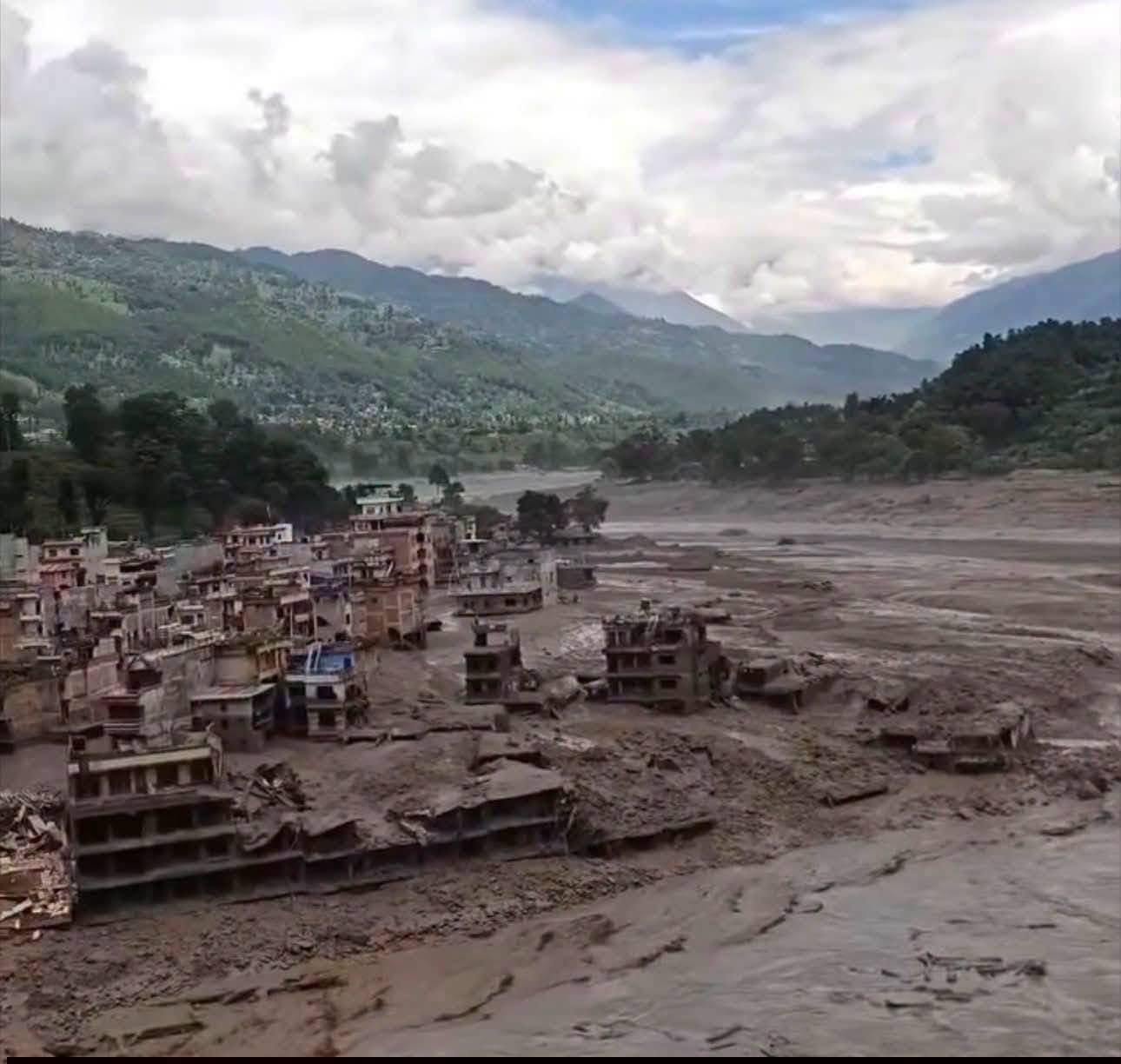
KATHMANDU, August 26, 2026 / The death toll from Nepal’s catastrophic Bhote Koshi flash flood has climbed dramatically to 157, as search teams continue to recover bodies across seven districts and hundreds of tourists, security personnel, workers and residents remain unaccounted for.
According to the latest police figures available at around 11 p.m. Wednesday, 157 bodies had been recovered. The highest number was found in Chitwan, with 64 deaths, followed by Dhading with 27, Nawalparasi East with 22, Gorkha with 19, Nuwakot with 13, Tanahun with nine and Rasuwa with three.
The rapidly rising toll reflects the extraordinary force of the flood, which swept bodies and debris far downstream through the Bhote Koshi and Trishuli river systems. Earlier official updates had reported 18, then 95 deaths, but the figures rose sharply as search teams reached downstream areas and additional bodies were recovered.
At least 28 Nepal Police personnel remain out of contact. Police said 64 officers had been stationed at posts in Timure, Rasuwagadhi, Syafrubesi, Mailung, Betrawati and Haku; 36 had been contacted by late Wednesday while the whereabouts of 28 remained unknown. More than 3,300 police personnel have been mobilized nationwide for search, rescue and disaster-response operations.
Police also said 41 injured people were receiving hospital treatment as of the late-night update, including patients at Tribhuvan University Teaching Hospital, Trishuli Hospital, the National Trauma Centre and Bir Hospital.
Hundreds of tourists still unaccounted for
The disaster has also become an international emergency because of the large number of foreign tourists and pilgrims travelling through the Rasuwa corridor toward Gosaikunda and Kailash Mansarovar.
The Nepal Tourism Board’s latest list said 403 tourists remained unaccounted for, including 341 foreign nationals and 62 Nepalis. Among them were 133 Indians, 47 Americans, 34 Australians, 33 British citizens, 24 Canadians and nationals of numerous other countries. Officials have stressed that “unaccounted for” does not necessarily mean confirmed missing in the flood, because mobile networks, roads and communications have been severely disrupted.
Workers at hydropower projects, customs employees and members of the security forces have also been reported out of contact, meaning the overall number of people whose whereabouts remain uncertain is still evolving.
What caused the disaster?
The flood struck the Nepal-China border region on Wednesday morning, surging into the Bhote Koshi system near Timure and Rasuwagadhi before racing through Syafrubesi, Mailung, Betrawati and downstream into the Trishuli River.
Initial theories included a glacial lake outburst, an earthquake-triggered avalanche or the collapse of a natural dam. New satellite analysis, however, has strengthened evidence that a large section of glacier and ice-covered rock collapsed high in the Himalayan region, plunging roughly 1,200 metres into the valley and generating an enormous ice-rock avalanche and debris surge.
A 4.4-magnitude seismic event was recorded around the time of the disaster, but scientists are still investigating whether the tremor triggered the collapse or was itself associated with the massive movement of ice and rock.
Nepalese and Chinese meteorological officials said there was no significant rainfall capable of explaining a flood of this scale, further weakening the theory that ordinary monsoon rainfall caused the disaster. Nepal and China have now agreed to strengthen the exchange of meteorological and hazard information while scientists continue investigating the exact sequence of events.
Authorities have also warned that unstable debris or water trapped upstream could still pose a threat of another sudden surge.
Roads, bridges, power plants and entire settlements destroyed
The destruction extends far beyond the rising human toll.
Large sections of Timure, Syafrubesi and settlements along the Trishuli corridor have been devastated. Homes, markets, government buildings, police posts, vehicles and commercial properties were swept away or buried under mud, rocks and debris.
The 42-kilometre road corridor between Betrawati and the Rasuwagadhi border has been damaged at multiple locations, while several concrete bridges have been swept away, effectively severing one of Nepal’s most important overland trade routes with China.
The energy sector has also suffered a major blow. Flood damage affected hydropower plants, substations and transmission infrastructure, knocking approximately 430 megawatts of electricity and related generation capacity out of the system in preliminary assessments.
The economic consequences could extend to electricity generation, tourism, insurance, cross-border commerce, transportation and the cost of rebuilding roads, bridges and communities.
Nepal mobilizes massive rescue operation
The Nepali Army, Nepal Police and Armed Police Force have mobilized helicopters, drones, rescue teams and medical personnel. Bad weather, washed-out roads, thick sediment and damaged communications have repeatedly complicated operations.
The government has ordered free treatment for the injured, emergency food and shelter for displaced families and rapid restoration of roads, electricity, drinking water and telecommunications. Flood-affected local governments have been declared disaster crisis zones for three months, allowing emergency resources and international assistance to be mobilized more quickly.
India, China and World Bank offer emergency assistance
International support has also begun to mobilize.
India has asked Nepal for a list of urgently needed relief supplies, while China has offered immediate financial assistance. The World Bank has indicated that as much as Rs 25 billion could potentially be mobilized from various sources for emergency response and recovery, according to Nepal’s Finance Ministry.
The International Federation of Red Cross and Red Crescent Societies has also released nearly CHF 1 million in emergency funding to support Nepal Red Cross operations in isolated flood-hit communities.
Full scale of catastrophe still unknown
Despite the confirmation of 157 deaths, authorities caution that the final human and economic toll could rise significantly.
Hundreds of people remain out of contact, entire settlements are still difficult to reach, major transport links have disappeared and search teams continue examining riverbanks many kilometres downstream.
The immediate priorities are now locating the missing, rescuing stranded survivors, monitoring the possibility of another upstream surge, restoring communications and determining the true scale of damage.
For Nepal, the disaster has also raised urgent questions about Himalayan glacier instability, climate change, cross-border early-warning systems and the safety of communities and infrastructure built along increasingly vulnerable mountain river corridors.
As rescue operations continue through the night, the Bhote Koshi catastrophe is emerging as one of Nepal’s most devastating flood disasters in recent memory, with its full consequences still unfolding.