Finland, Sweden Scramble Fighter Jets in First Joint Mission to Identify Russian Military Aircraft

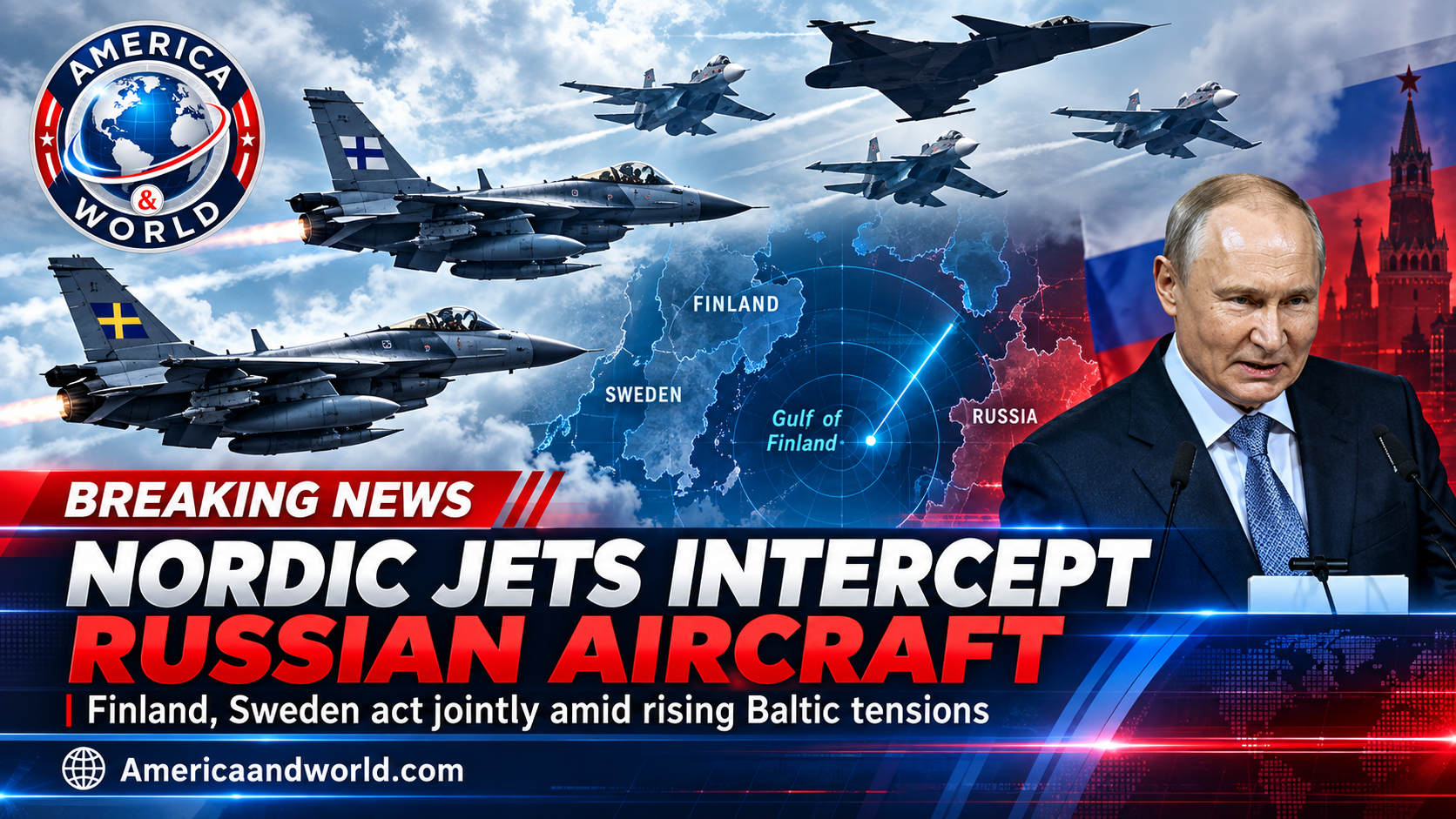
HELSINKI/STOCKHOLM — Finnish and Swedish fighter jets were scrambled together for the first time on September 24 to intercept and identify a formation of Russian military aircraft over the Gulf of Finland, marking a significant step in the growing integration of Nordic air defenses as NATO strengthens its northeastern flank.
Finnish F/A-18 Hornets and Swedish JAS 39 Gripens carried out the joint Quick Reaction Alert mission after Russian military aircraft were detected flying through international airspace over the Gulf of Finland.
According to the Swedish Armed Forces, the Russian formation consisted of a Tu-134 transport aircraft accompanied by MiG-31 interceptors and Su-30 fighter jets. The operation was directed by the Finnish Air Force’s Air Operations Centre and represented the first joint operational identification mission conducted by the Finnish and Swedish air forces.
Swedish Air Force commander Maj. Gen. Jonas Wikman said the operation demonstrated how closely the two countries can now work together after years of joint training and military cooperation.
“This is what close cooperation looks like in practice,” Wikman said, adding that Finnish and Swedish forces are increasingly able to operate seamlessly as both neighboring air forces and NATO allies.
The mission did not involve a reported violation of Finnish or Swedish sovereign airspace. Instead, the Russian aircraft were intercepted and identified while operating in international airspace.
Nordic Air Defense Integration Accelerates
Finland and Sweden have conducted cross-border air exercises for years, but their cooperation has deepened significantly since both countries joined NATO.
Finland became NATO’s 31st member in April 2023, while Sweden joined as the alliance’s 32nd member in March 2024. Their accession dramatically changed the strategic geography of northern Europe, bringing virtually all Nordic countries into the alliance and expanding NATO’s ability to coordinate operations across the Baltic Sea and Arctic regions.
Under increasingly integrated Nordic air-defense arrangements, Finnish and Swedish Quick Reaction Alert aircraft can also operate from each other’s air bases when necessary. Finland, Sweden, Norway and Denmark are developing broader interoperability through Nordic Air Power cooperation, while coordinating with NATO’s Baltic Air Policing forces.
NATO has also expanded its eastern defenses through additional fighter aircraft, surveillance systems, air defenses, naval assets and multinational forces. In June 2026, the alliance established a multinational Forward Land Forces battlegroup in Finland, led by Sweden.
Rising Concern Over Russian Military Activity
The Sept. 24 operation came amid continuing concern among NATO governments about Russian military flights, drone activity, cyber operations and other security incidents along the alliance’s eastern boundaries.
NATO says Russian aircraft and drones have repeatedly approached or violated allied airspace in recent years, prompting the alliance to strengthen air policing and launch its broader “Eastern Sentry” deterrence effort. NATO says its measures are defensive and intended to protect allied territory and reduce the risk of military miscalculation.
The alliance also condemned Russian-linked airspace incidents affecting Poland and Romania in August 2026, describing such violations as dangerous and unacceptable and saying integrated air and missile defenses along the eastern flank were being reinforced.
Sweden itself has repeatedly scrambled Gripen fighters to identify Russian aircraft operating near its airspace. In June, Swedish jets intercepted Russian Su-24 and Su-34 aircraft over the Baltic Sea, although Swedish authorities said their national airspace was not violated during those encounters.
Estonia Warns About Future Russian Military Capability
Security concerns are particularly acute in Estonia, which lies directly across the Gulf of Finland and shares a border with Russia.
Estonian Defense Minister Martin Herem has said Russia could regain the ability to use some level of military force against Estonia within roughly a year, depending partly on developments in the war in Ukraine. Herem has emphasized that Estonia should evaluate whether its military preparations are moving quickly enough to deal with that possibility rather than treating an attack as inevitable.
Estonian Prime Minister Kristen Michal has separately said Tallinn is prepared to close border crossings with Russia immediately if changing security conditions — including a possible Russian mobilization — make such action necessary.
Putin Rejects European Warnings
Russian President Vladimir Putin has rejected claims that Moscow is preparing for military action against NATO or other European states.
Speaking in St. Petersburg on September 25, Putin said Russia had no plans or motive to launch military operations against Europe and accused European governments of exaggerating the Russian threat.
He also sharply mocked warnings coming from Estonia and other European states, dismissing suggestions of a planned Russian attack as absurd.
Western governments, however, continue to assess Russia’s military rebuilding and hybrid operations as significant long-term security concerns.
Danish Intelligence: Risk Low, But Growing
A new assessment released September 24 by Denmark’s Defense Intelligence Service said the risk of Russia carrying out a limited military attack against a NATO country remains low but is increasing.
The agency also assessed that Russia is likely to intensify hybrid operations against NATO and Western countries in the coming months.
While Danish intelligence considers a full-scale Russian invasion of a NATO country unlikely, it said such a scenario can no longer be completely ruled out.
The assessment does not say a Russian attack is imminent. Rather, it reflects growing European concern about Moscow’s military capabilities, willingness to accept risk and use of hybrid tactics while the war in Ukraine continues.
Against that backdrop, the Finnish-Swedish operation over the Gulf of Finland carries significance beyond a routine aircraft identification mission. It demonstrates how rapidly NATO’s newest members are integrating their forces and how the Baltic and Nordic regions are becoming increasingly interconnected parts of the alliance’s collective air-defense system.