
Shocking Twist in Mamta Kafle Bhatt Murder Trial: Husband Admits Dismembering Her Body but Denies Killing Her

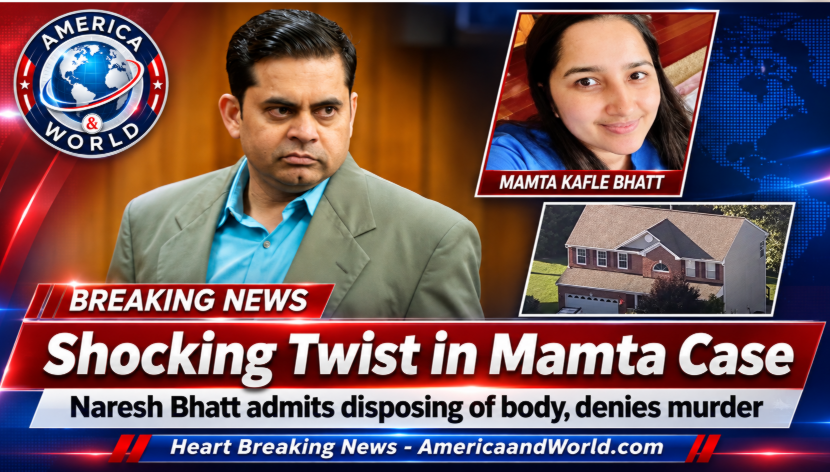
* “I Did Not Kill My Wife”: Naresh Bhatt Claims Mamta Died by Suicide, Admits Using Electric Saw to Dispose of Her Body
* Heartbreaking Revelation in Virginia Court: Naresh Bhatt’s Stunning Confession Raises New Questions in Mamta Kafle Murder Case
Naresh Bhatt tells Virginia court he found his wife dead and believed she had taken her own life, then used an electric saw to dismember and dispose of her remains. Prosecutors point to forensic evidence, surveillance footage and contradictory statements that raise serious questions about his account.
Virginia, USA | Thursday, November 5, 2026
In a deeply disturbing development in one of the most closely watched criminal cases involving the Nepali American community, Naresh Bhatt has reportedly admitted in a Virginia courtroom that he dismembered and disposed of his wife Mamta Kafle Bhatt’s body after finding her dead inside their Manassas Park home in July 2024.
However, Bhatt, who is standing trial for first-degree murder, has firmly denied killing his wife. He claimed that Mamta had apparently taken her own life and that he panicked after discovering her body.
The extraordinary testimony marks a dramatic departure from his earlier statements to investigators, when he maintained that Mamta had disappeared from their home and suggested she might have traveled to New York or Texas.
Mamta, a 28-year-old Nepali-born nurse and mother of a young daughter, disappeared in late July 2024. Despite extensive police investigations and community searches, her remains have never been recovered.
The latest testimony has brought renewed attention to the troubling circumstances surrounding her disappearance, the scientific evidence presented during the trial and the unanswered questions about how she died.
Bhatt Claims He Found His Wife Dead in Their Bedroom
According to Thursday’s courtroom account, Bhatt testified that he discovered Mamta lying unresponsive on the floor of their primary bedroom in the early morning hours of July 30, 2024.
He described seeing vomit containing what appeared to be medication, along with pills and pesticides nearby. He claimed that he attempted cardiopulmonary resuscitation but was unable to revive her.
Instead of contacting emergency medical services or notifying police, Bhatt said he became frightened and decided to conceal her death.
He reportedly acknowledged trying to place her remains in an outdoor garbage container and using an electric saw to dismember her body before disposing of the remains in trash bags.
These statements represent an admission to handling and concealing a dead body, but not an admission to murder.
Importantly, his claim that Mamta died by suicide remains unverified. Her body has never been found, and no independent medical determination establishing suicide has been presented in the available court reporting.
Forensic Evidence Raises Serious Questions
The prosecution has presented extensive forensic evidence that it argues supports its allegation that Bhatt murdered his wife before dismembering and concealing her remains.
During testimony on November 2, a forensic scientist from Virginia’s Department of Forensic Science said testing strongly indicated that a substantial amount of blood discovered in the couple’s primary bedroom belonged to Mamta.
Forensic bloodstain-pattern analyst Iris Dalley Graff described evidence suggesting that portions of the bedroom carpet had been cleaned and that a blood-bearing object or body may have been moved toward the adjoining bathroom.
Investigators also found blood and DNA evidence associated with an electric saw that Bhatt allegedly gave to a landscaper after Mamta disappeared. The landscaper subsequently surrendered the tool to authorities.
Prosecutors argue that these findings support their theory of a violent killing followed by an attempt to destroy evidence.
The defense has challenged aspects of the forensic investigation and maintains that the prosecution has not established precisely how Mamta died.
Surveillance Videos and Digital Records Presented in Court
Investigators have also examined Bhatt’s internet searches, mobile phone records, Tesla vehicle data and surveillance footage.
Videos shown to jurors reportedly captured Bhatt making multiple trips to dumpsters and trash compactors at different Northern Virginia locations around the time prosecutors believe Mamta was killed.
In some recordings, he appeared to be wearing gloves while disposing of large garbage bags.
Prosecutors believe those bags may have contained Mamta’s remains or materials used to clean the alleged crime scene. However, investigators have not produced direct forensic proof establishing what was inside the bags.
Additional evidence presented during the trial included unusual water consumption at the couple’s residence around the time of Mamta’s disappearance. Prosecutors have suggested that the increased usage may be consistent with extensive cleaning, although the evidence does not independently establish what occurred inside the home.
Mamta’s Brother Describes Alleged Domestic Abuse
Another emotional moment in the trial came when Mamta’s brother, Mahesh Kafle, testified about concerns regarding his sister’s marriage.
Mahesh told jurors that several months before her disappearance, Mamta secretly sent him a photograph showing what appeared to be an injury around her eye.
According to his testimony, Mamta told him that Naresh had caused the injury and asked him to preserve the photograph because she might need it in the future.
A close family friend also testified that Bhatt had discussed the possibility of divorce months before Mamta disappeared.
The same witness said Bhatt gave her Mamta’s jewelry and his own wedding ring several weeks after the disappearance.
Bhatt, however, denied ever physically assaulting his wife when he testified in his own defense.
He acknowledged that their marriage had become strained and that their relationship had deteriorated in the months preceding her disappearance.
From a Difficult Childhood to a Murder Trial
Bhatt began testifying in his own defense on Wednesday, November 4, describing his childhood in India and Nepal, his family’s financial struggles and his eventual move to the United States.
He also discussed his experience serving in the U.S. Army, where he said he had experienced nightmares, sleep disturbances and other symptoms he associated with mental health difficulties.
Bhatt testified that he believed Mamta had experienced emotional difficulties before her disappearance and acknowledged that he might not have recognized signs of distress.
Nevertheless, these statements do not establish the cause of Mamta’s death or independently substantiate his claim of suicide.
Why Did Bhatt Initially Claim His Wife Had Disappeared?
One of the most significant issues emerging from the latest testimony is the contradiction between Bhatt’s earlier account and his current explanation.
After Mamta disappeared, Bhatt told police he did not know where she was. He suggested she might have left voluntarily and reportedly mentioned several possible destinations.
Now, more than two years later, he has reportedly acknowledged that he found her dead at home and concealed her remains.
This contradiction raises important questions that jurors must evaluate.
If Mamta died by suicide, why were emergency services never contacted? Why were her family members and investigators allegedly misled about her whereabouts? And how should the jury interpret the extensive blood evidence alongside Bhatt’s explanation that he panicked after discovering her body?
The answers will be central to determining whether prosecutors have proved murder beyond a reasonable doubt.
What Happens Next?
Bhatt faces charges of first-degree murder, concealment of a dead body and defiling a dead body.
The prosecution completed its presentation of evidence on November 2, after several weeks of forensic testimony, digital records, surveillance videos and statements from Mamta’s family and friends.
The defense subsequently began presenting its case, including testimony from Bhatt himself.
The central legal distinction is now particularly important: admitting to dismembering and concealing a body does not automatically establish responsibility for causing the person’s death.
Prosecutors must prove their murder allegation beyond a reasonable doubt, while the jury must evaluate Bhatt’s testimony against the physical evidence, witness accounts and other circumstances.
With Mamta’s remains still missing, the precise cause of her death remains a major unresolved issue.
For Mamta’s grieving family, the prolonged legal battle has meant more than two years of uncertainty. Her mother, Gita Kafle, previously testified emotionally about the sudden loss of contact with her daughter, with whom she had communicated almost daily.
The case has deeply affected Nepali communities in Virginia and across the United States, drawing widespread concern over domestic violence, justice and the welfare of the couple’s young daughter.
The latest courtroom testimony has fundamentally changed the public understanding of Mamta Kafle Bhatt’s disappearance. But the most important question remains unanswered: Did Mamta die by suicide, as Naresh Bhatt claims, or was she murdered, as prosecutors allege?
Ultimately, that determination belongs to the jury, based on the evidence presented in court.