
Rural Support for Trump Rebounds Ahead of Midterms, but National Polls Show Republicans Facing an Uphill Battle

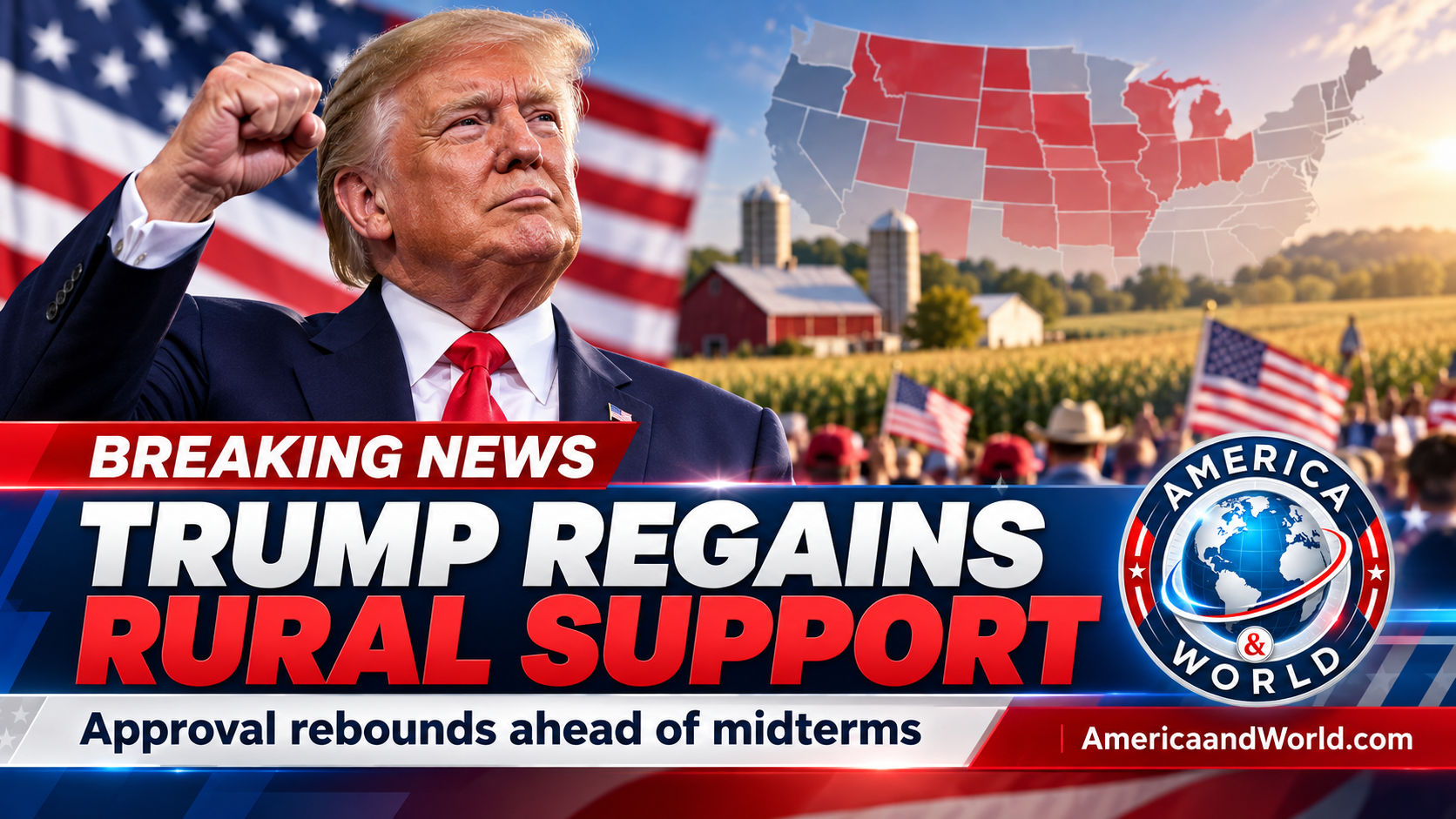
A new survey by Echelon Insights, conducted October 15–19, found that Trump’s approval rating among rural likely voters had climbed to 50 percent, placing him narrowly in positive territory with a net approval rating of approximately one percentage point.
The apparent recovery follows months of fluctuating rural support. Earlier Echelon surveys showed his net approval declining by seven points between June and July, followed by a partial rebound in August and another significant setback in September. The latest findings suggest that Trump has regained some ground among voters who have traditionally formed an important part of the Republican electoral coalition.
However, the national picture tells a different story.
Echelon Insights surveyed 1,010 likely voters nationwide and found that only 39 percent approved of Trump’s job performance, while 60 percent disapproved. That leaves the president with a negative net approval rating of 21 percentage points.
The same survey found Democrats leading Republicans by 50 percent to 45 percent on the generic congressional ballot, indicating a potentially challenging political environment for the president’s party.
Economic anxiety appears to be a major factor shaping voter sentiment. According to Echelon’s findings, 74 percent of respondents identified ending the Iran war as a measure that could help ease living costs, while an equal percentage favored reducing government spending. Majorities of voters in both major parties also viewed high costs as a potential reason Republicans could lose control of Congress.
Seeking to strengthen Republican turnout, Trump traveled to Sioux City, Iowa, on Thursday, October 22, where he addressed supporters at Sioux Gateway Airport. The rally was part of a broader effort to energize conservative voters and support Republican candidates facing increasingly competitive contests.
Trump urged supporters to treat the congressional elections as though his own political future were directly on the ballot. He encouraged them to vote for Republican candidates across the ticket, emphasizing the importance of turnout in determining control of Congress.
Iowa has become particularly important as Republicans defend competitive Senate and House races alongside the governorship. Although Trump carried the state comfortably in the 2024 presidential election, concerns over household expenses, fuel prices and the Iran conflict have complicated the Republican campaign.
The rural improvement could provide a timely boost to Republican candidates in politically competitive states such as Iowa, Kansas and Alaska. However, political analysts caution that presidential approval does not automatically translate into support for individual congressional candidates, particularly when local issues and candidate popularity influence voters’ choices.
Other national surveys reinforce the challenges facing the White House. A RealClearPolling average covering late September through October 22 placed Trump’s approval at approximately 38.8 percent, compared with 60.4 percent disapproval. This suggests that his difficulties extend beyond a single polling organization’s findings.
The latest rural figures also warrant caution because demographic subgroups have smaller sample sizes and greater statistical uncertainty than national polling samples. A narrow positive rating among rural respondents should therefore not be interpreted as definitive evidence of a lasting political shift.
With Election Day approaching, Republicans are hoping that renewed enthusiasm in rural communities will help offset Democratic advantages elsewhere. Democrats, meanwhile, are seeking to capitalize on widespread dissatisfaction with living costs, economic uncertainty and the administration’s handling of major international challenges.
The central question heading into November 3 is whether Trump’s recovering rural support will translate into enough Republican votes to protect the party’s congressional position, or whether broader national disapproval will give Democrats the advantage.