Deadly Attack on Riyadh International Airport Kills 12, Injures 309 as Middle East Tensions Escalate

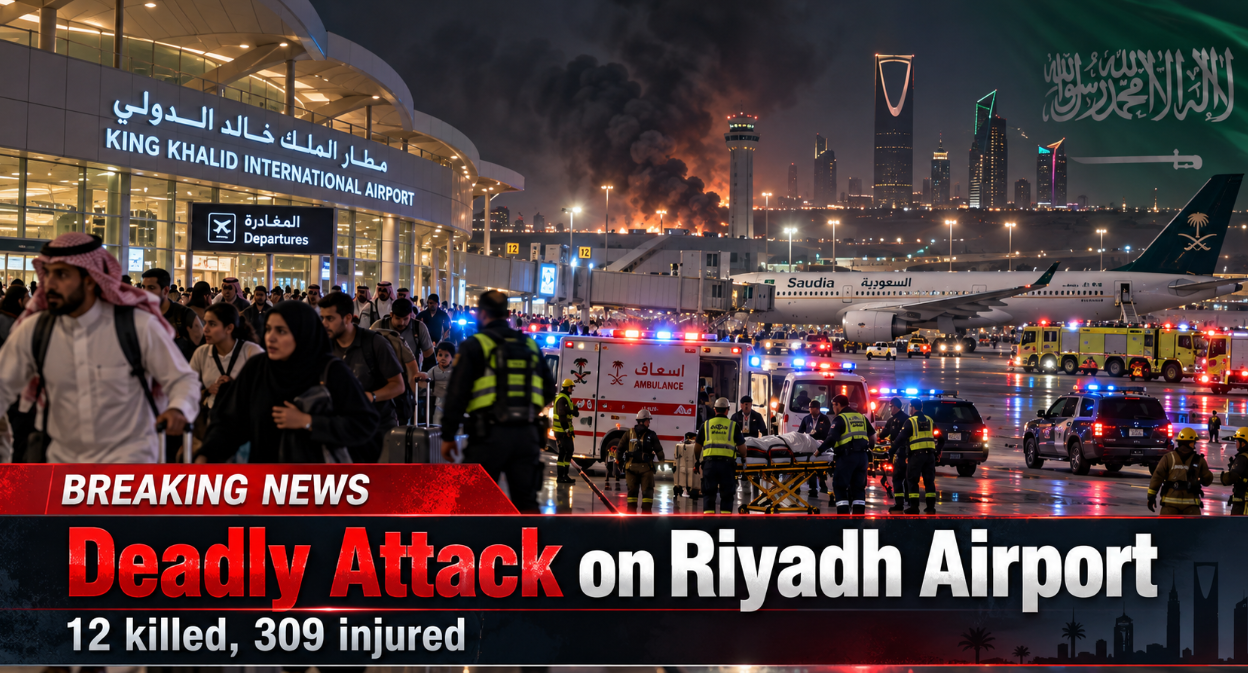
RIYADH, Saudi Arabia, October 10, 2026 – At least 12 people were reportedly killed and 309 others injured in a devastating attack on King Khalid International Airport in Saudi Arabia’s capital on Saturday, marking the third reported strike against the major aviation hub within a week and raising fears of a wider regional conflict.
According to initial reports, the victims included four Saudi nationals, two Bangladeshis, and one citizen each from the United States, Jordan, Palestine, Syria, Sudan, and Egypt. Several injured passengers were reportedly in critical condition, raising concerns that the death toll could increase.
Witnesses described a powerful explosion that sent terrified travelers running for safety. Emergency crews and ambulances rushed to the airport, while medical facilities mobilized additional personnel to treat the wounded. The explosion reportedly damaged sections of the terminal and caused widespread disruption.
Airport authorities reportedly suspended operations temporarily, forcing international flights to be canceled or diverted. Several major airlines, including Qatar Airways and Etihad Airways, were said to have been affected. Foreign diplomatic missions reportedly issued security warnings advising travelers to avoid the airport and surrounding areas.
Suspicion has fallen on Yemen’s Iran-backed Houthi rebels, although responsibility for the latest attack has not been independently established. The group has previously threatened Saudi aviation facilities amid renewed fighting with Saudi-backed Yemeni government forces.
The reported assault follows two earlier attacks targeting the Riyadh airport. The repeated targeting of civilian aviation infrastructure has raised serious questions about regional security and the effectiveness of Saudi Arabia’s sophisticated air defense systems.
Meanwhile, reports suggest that U.S. President Donald Trump has indicated Washington could consider participating in military action against the Houthis alongside Saudi Arabia. However, details of any possible American military involvement remain unclear.
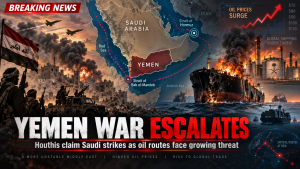
The renewed violence comes amid continuing tensions in Yemen and around the strategically important Bab el-Mandeb Strait, a vital maritime passage connecting the Red Sea with the Gulf of Aden. Control of this shipping corridor remains central to regional security, with significant implications for international trade and energy transportation.
The reported attacks also pose a potential threat to Saudi Arabia’s economic ambitions, including tourism development, foreign investment, and international business activities in Riyadh.
With military tensions intensifying across the Middle East, analysts warn that further retaliation could destabilize the wider Gulf region, disrupt global aviation and shipping routes, and place additional pressure on international energy markets.