US, Israel signal tougher stance on Iran as Gulf tensions deepen

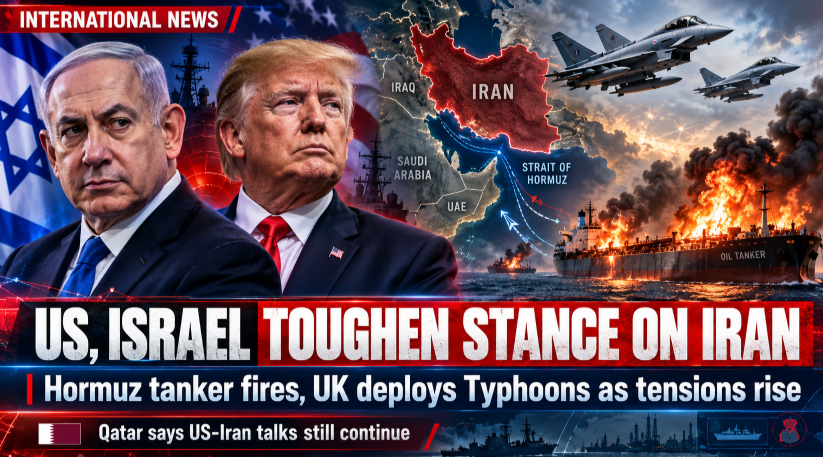
International News | October 20, 2026
Tensions across the Middle East are rising again as Israel, the United States, Iran and regional actors exchange sharp warnings, military moves and diplomatic signals.
Israeli Prime Minister Benjamin Netanyahu said he and US President Donald Trump are committed to confronting what he described as the Iranian regime, arguing that a major shift in Tehran would weaken Iran-backed groups across the region and reshape the security situation in Lebanon and beyond.
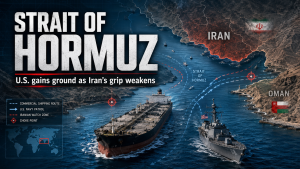
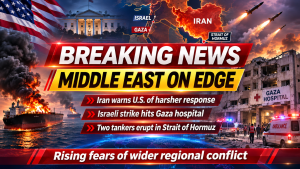
At the same time, new security concerns have emerged in the Strait of Hormuz after reports that two tankers caught fire. Iran’s Islamic Revolutionary Guard Corps claimed the vessels were hit by sea mines, but US Central Command rejected that account, saying international shipping lanes remain open and that Iran’s version of events is inaccurate.
Despite the growing confrontation, diplomacy has not completely stopped. Qatar says talks between Iran and the United States are still continuing, even as fears of renewed fighting grow. Qatari officials have also warned that the fallout from the conflict could trigger broader shocks in global energy markets.
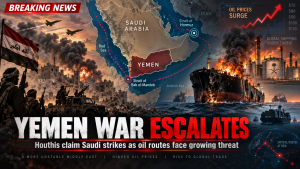
The wider regional picture is also becoming more volatile. The United Kingdom says it will deploy Typhoon fighter jets to help defend Saudi Arabia from attacks by Yemen’s Houthi forces, underscoring how the conflict is spreading beyond Israel and Iran themselves.
Iran, meanwhile, says it is prepared to counter more advanced US and Israeli weapons with lower-cost but effective “asymmetric” tactics, including drones and other systems designed to impose heavy costs on its adversaries.
With military threats increasing, shipping security under pressure, and energy markets on edge, the Middle East appears to be entering another dangerous phase. Even though diplomatic contacts are still open, the mix of battlefield escalation, naval insecurity and hardline political rhetoric is raising fears of a broader regional war.