
Trump Administration Sends $500 ACA Refund Checks to Nearly One Million Americans, Who Qualifies?

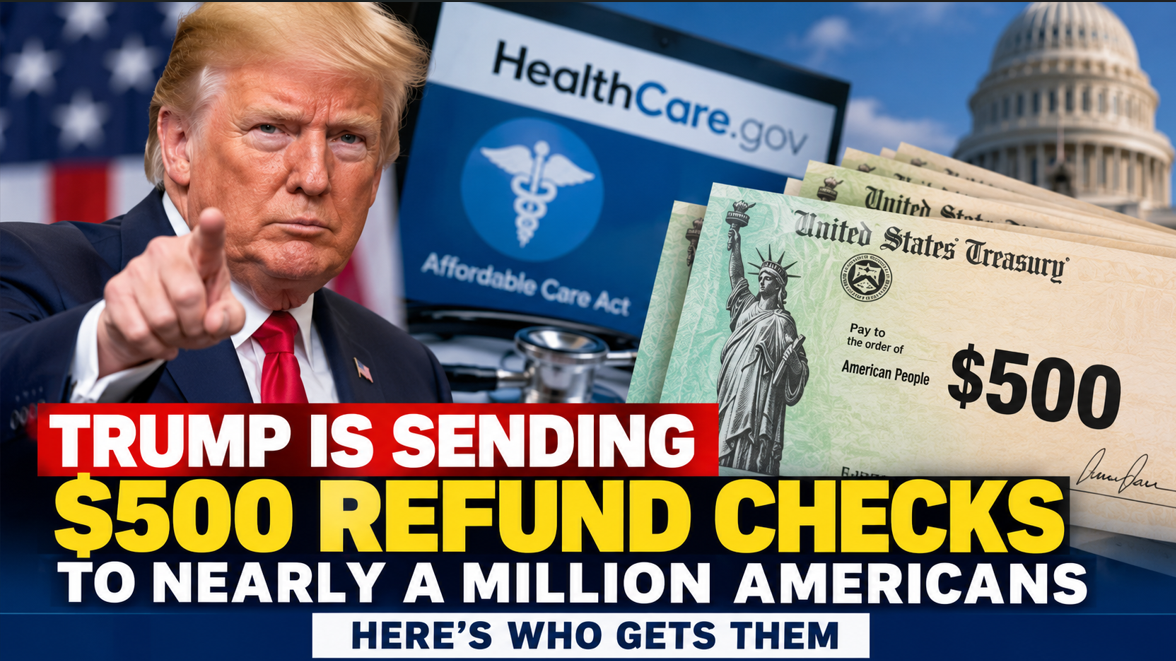
The Trump administration has begun sending one-time $500 health insurance refund checks to nearly one million Americans enrolled in Affordable Care Act plans, with the payments targeting people who purchased coverage through the federal HealthCare.gov marketplace without receiving federal premium subsidies.
The U.S. Treasury Department began issuing the payments this week to more than 950,000 eligible policyholders across 30 states that rely on the federally operated ACA marketplace. The administration says the money comes from surplus fees collected from insurers to finance operation of the federal insurance exchange.
President Donald Trump announced the initiative in September, describing the payments as refunds of money that consumers had effectively paid through higher insurance premiums. The White House argues that the federal government accumulated more money through HealthCare.gov user fees than was necessary to operate the exchange and that the excess should be returned to consumers who received no federal help paying their premiums.
The administration has characterized those fees as an “overcharge” associated with policies during the Biden administration. However, independent health policy analysts have noted that the history of the surplus is more complicated.
KFF research found that more than $1.2 billion in unused federal marketplace user-fee revenue had already accumulated between fiscal years 2018 and 2020, during Trump’s first administration. The buildup occurred largely because federal spending on enrollment assistance, advertising, consumer outreach and other marketplace operations was substantially reduced while insurer user-fee collections continued.
That history means the administration’s assertion that the surplus resulted exclusively from Biden-era overcharging is disputed by independent analysts.
The $500 checks will generally go to people who bought ACA coverage through HealthCare.gov but did not receive premium tax credits. Most ACA Marketplace customers receive some form of subsidy, so the refund program applies to a relatively small portion of the overall marketplace population.
According to the White House, many recipients are middle-income individuals and families whose incomes placed them above the subsidy eligibility limits applicable in 2026. The administration says nearly one million people qualify.
The participating states are Alabama, Alaska, Arizona, Arkansas, Delaware, Florida, Hawaii, Indiana, Iowa, Kansas, Louisiana, Michigan, Mississippi, Missouri, Montana, Nebraska, New Hampshire, North Carolina, North Dakota, Ohio, Oklahoma, Oregon, South Carolina, South Dakota, Tennessee, Texas, Utah, West Virginia, Wisconsin and Wyoming.
People enrolled through state-operated insurance exchanges are not included in this particular federal refund initiative.
The payments are also different from the traditional ACA Medical Loss Ratio rebates that some insurance companies send to customers each year. Under the ACA’s Medical Loss Ratio rules, individual and small-group insurers generally must spend at least 80 percent of premium revenue on medical care and quality improvement. Insurers that fail to meet that threshold must return part of their premium revenue to customers. The new $500 federal payments instead come from accumulated HealthCare.gov marketplace user-fee revenue.
The timing of the checks places healthcare costs back in the national spotlight ahead of the November 2026 congressional midterm elections. Republicans currently control Congress and are seeking to retain their majorities, while Democrats have focused heavily on rising healthcare premiums and changes to ACA financial assistance.
The refunds arrive during a difficult period for many Americans buying insurance through the ACA marketplaces.
Enhanced premium tax credits originally enacted through the American Rescue Plan in 2021 and later extended through 2025 expired at the end of last year. As a result, many customers received substantially less federal assistance in 2026, while some middle-income households lost eligibility for subsidies altogether.
KFF found that Marketplace enrollment fell significantly following the expiration of the enhanced subsidies. Effectuated ACA Marketplace enrollment declined from about 22.1 million people in 2025 to approximately 19.2 million in early 2026, a drop of roughly three million people. The decline coincided with sharp increases in premium payments for many consumers.
Some households have faced increases substantially larger than the $500 refund they will receive.
The administration has said the one-time payment could offset a meaningful portion of increased insurance costs for some households, although the impact will depend heavily on a consumer’s age, income, location and insurance plan.
At the same time, the Trump administration is moving to lower the fees charged to insurers participating in the federal marketplace.
For 2026, insurers using the federally facilitated marketplace pay a user fee equal to 2.5 percent of monthly premiums. CMS has finalized a reduction to 1.9 percent for 2027. Insurers using state-based marketplaces operating on the federal platform will see their fee fall from 2 percent to 1.5 percent. CMS argues that reducing these charges could place downward pressure on premiums because insurers typically incorporate marketplace fees into the prices paid by policyholders.
The administration has paired the refund announcement with broader claims that it is attempting to reduce healthcare costs, combat improper ACA enrollment and lower prescription drug prices. Critics, meanwhile, point to reduced federal healthcare spending and the expiration of enhanced ACA subsidies as factors that have increased costs or reduced coverage for some Americans.
The broader debate is likely to intensify when the next ACA open-enrollment period begins. Consumers will then be able to compare premiums, deductibles and available federal assistance for 2027 coverage.
For people wondering whether they qualify for the new payment, the central requirements are relatively straightforward: the individual must have been enrolled in qualifying ACA coverage through HealthCare.gov in one of the 30 participating states and must fall within the group that purchased coverage without federal premium assistance.
The refunds are one-time $500 payments and are not a new nationwide stimulus check, Social Security payment or general tax rebate. They are specifically connected to the federal Affordable Care Act insurance marketplace.
For nearly one million Americans paying the full cost of their ACA plans, however, the checks will provide some direct relief at a time when health insurance affordability remains one of the most closely watched household expenses in the country.