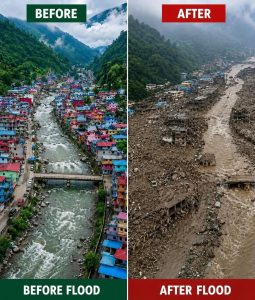
Nepal Flood Death Toll Reaches 781 as 20,618 Security Personnel Join Massive Rescue Operation

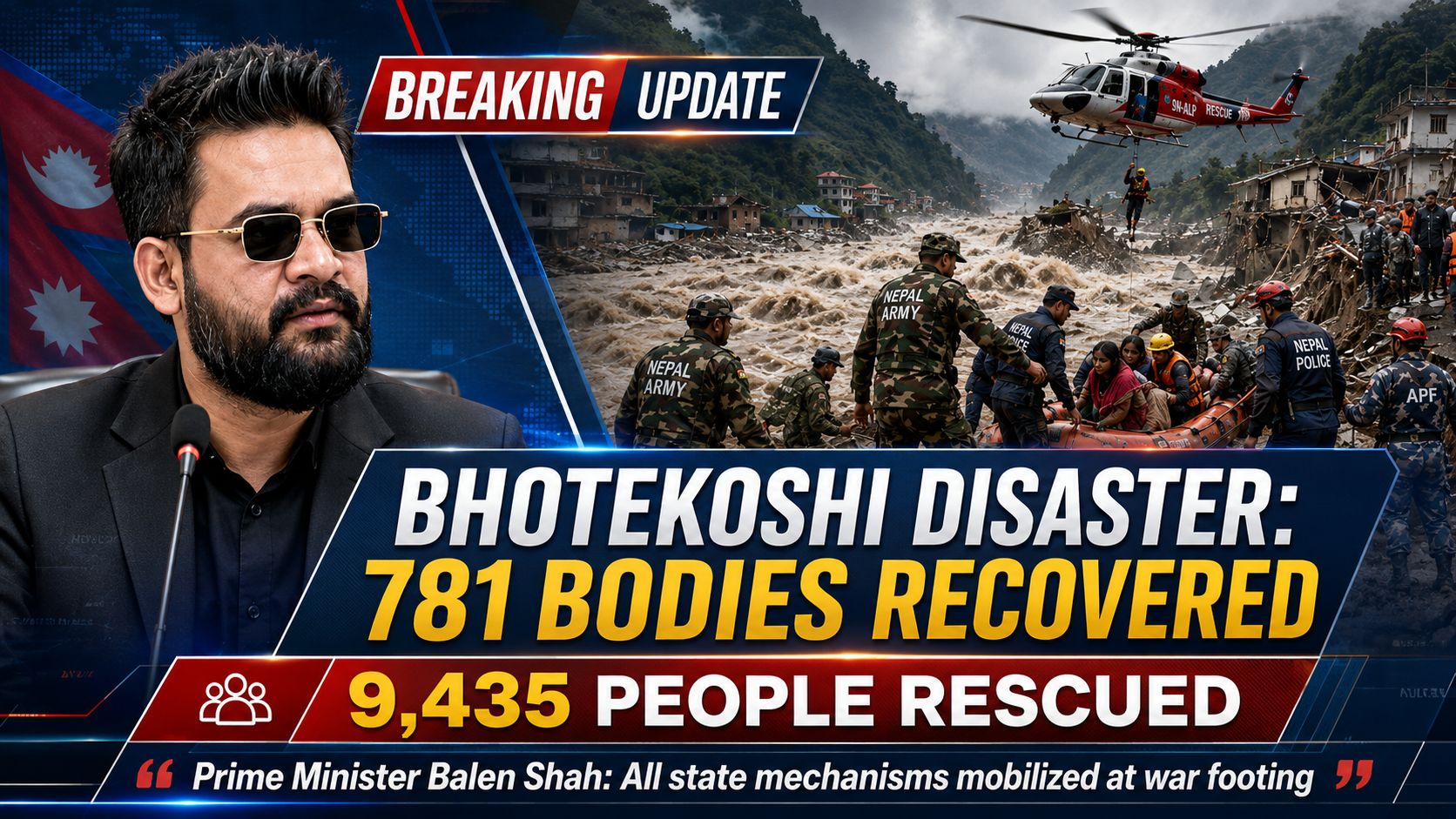
394 helicopter flights completed; 9,435 people rescued, 156 of 267 injured discharged; more than Rs 5.24 billion collected in PM Relief Fund
KATHMANDU, Nepal / August 30, 2026 / The death toll from Nepal’s catastrophic Bhotekoshi flood has risen to 781, while 9,435 people have been rescued and moved to safer locations by air and land, Prime Minister Balen Shah said Sunday as the government intensified one of the largest disaster-response operations in the country’s recent history.
In a detailed public update issued on the fifth day of the disaster, Shah outlined ongoing search-and-rescue operations, medical treatment, relief distribution, international assistance, restoration of roads and communications, and the management and identification of bodies recovered from flood-affected areas.
The prime minister said the government had mobilized the entire state machinery on a “war footing,” stressing that protecting citizens and providing support to affected communities remained the government’s highest responsibility.
Nepal has been confronting what Shah described as an “unimaginable and heartbreaking natural disaster” for the past five days. He said unfavorable weather, difficult terrain and continuing risks have made it challenging to establish the full scale of the destruction.
More Than 20,000 Security Personnel Deployed
According to the prime minister, 20,618 personnel from the Nepal Army, Nepal Police and Armed Police Force have been deployed for search, rescue and relief operations.
Volunteers, local authorities and teams from several government agencies and organizations are also working across the disaster zone.
The government has completed 394 rescue and relief flights, including 72 additional flights on Sunday alone, as helicopters continue ferrying stranded people, emergency personnel, food, medicines and other supplies into areas cut off by damaged roads and bridges.
Special Rescue Operations at Hydropower Projects
Authorities have placed particular emphasis on rescuing workers and other people trapped around hydropower installations affected by the flood.
Nepal Army helicopters have so far rescued 279 people from hydropower project areas.
At the Upper Trishuli-1 project area in Rasuwa, approximately 250 people have been rescued during the past two days. Chinese and South Korean specialist teams are working alongside the Nepal Army in the area.
A Chinese technical team has reportedly searched approximately three kilometers inside one tunnel but has not yet found anyone.
At the Upper Trishuli-3A Hydropower Project in Nuwakot, rescue teams are attempting to gain access to a tunnel where people are feared trapped. Nepal Army engineers are using controlled blasting to widen access.
A 90-member joint rescue team, including Nepal Army personnel, Armed Police Force members with trained search dogs, Nepal Police specialists and technical personnel, has been deployed at the site.
By Sunday afternoon, rescuers had reached the main section of the tunnel and opened an approximately two-by-three-foot passage. Personnel descended using ropes and called out for possible survivors but received no response.
Authorities are now simultaneously widening the opening, carrying out additional blasting and deploying heavier machinery.
At the Upper Trishuli-3B Hydropower Project, personnel from the Nepal Army’s Bhairavnath Battalion and the Nepal Electricity Authority are conducting rescue operations with support from Chinese specialists.
At the Chilime Hydropower Project in Rasuwa, Indian experts have begun rescue activities using pumps and excavators following an on-site assessment conducted in coordination with the Nepal Army.
The Nepal Army is also continuing search-and-rescue patrols around the Langtang Khola Hydropower Project, where an Indian team has been deployed with specialized equipment.
At the Mailung Khola Hydropower Project, a South Korean specialist team has begun operations in coordination with the Nepal Army after conducting an aerial assessment of the site.
267 Injured Rescued, 156 Discharged
Authorities have so far rescued 267 injured people, who have been treated at local hospitals and medical facilities in Kathmandu.
Of them, 156 have already been discharged following treatment, while officials say the condition of many remaining patients is improving.
Special medical teams, including doctors and psychosocial-support personnel, have been sent from Kathmandu to affected communities.
The government is also working to restore health facilities whose operations were disrupted by the flooding.
More Than Rs 5.24 Billion Raised for Flood Victims
Prime Minister Shah said financial contributions for disaster victims are being collected through government disaster and relief funds.
As of midday Sunday, Rs 5,247,944,585 — more than Rs 5.24 billion — had been deposited into accounts maintained by nine commercial banks under the Prime Minister Relief Fund.
An additional US$2.1 million has been deposited through Himalayan Bank and Laxmi Bank, according to the prime minister.
The government is also operating a digital “Rescue Request Portal” and has pledged to publicly disclose details of financial contributions received from Nepal and abroad.
Officials are discussing mechanisms to ensure that the funds are used transparently and effectively for rescue, relief, rehabilitation and reconstruction.
26 Temporary Shelters and Relief Centers Established
Relief distribution has been expanded throughout the worst-affected areas.
Supplies collected at the Tribhuvan International Airport warehouse, the Kathmandu District Administration Office and the Nepal Police Disaster Management Training Center in Samakhusi are being transported by air and road to the Nepal Army’s Maithili Barracks in Battar, Nuwakot, and to Uttargaya in Rasuwa.
From there, supplies are being distributed through additional logistical centers, including the police office at Baireni in Dhading and the Nepal Army barracks in Dhunche, Rasuwa.
The government has established 26 temporary shelters and relief-distribution centers in Rasuwa and Nuwakot.
On Sunday alone, 3,454 people received temporary shelter or relief assistance through those centers, according to Shah.
International Assistance Expands
The international community has continued pledging financial, humanitarian and technical assistance for Nepal’s disaster response and recovery efforts.
According to the prime minister, the Asian Development Bank has pledged a US$5 million grant, while the World Bank has committed US$167 million in concessional financing.
The United States has pledged US$500,000, while Australia has committed US$1 million in cash assistance.
The ADB has also pledged approximately US$150,000 in technical assistance.
India has supplied 68.5 metric tons of humanitarian aid and essential medicines in four separate shipments.
Nepal has requested 30 Bailey bridges from China to restore vital road connections destroyed by the flooding.
India on Sunday dispatched a 230-foot single-lane modular steel bridge and has committed to providing seven additional Bailey bridges, according to the prime minister.
Switzerland has also provided 1 million Swiss francs in assistance to be administered through the United Nations.
Telecommunications Gradually Restored
Communication services disrupted by the disaster are gradually returning across most affected areas.
The Nepal Telecommunications Authority dispatched 20 satellite phones to disaster-hit regions on Sunday.
Before the flood, Nepal Telecom operated 120 BTS towers and Ncell operated 78 towers in the affected region.
The disaster disrupted service at 38 Nepal Telecom towers and 27 Ncell towers.
Authorities say 106 Nepal Telecom towers and 75 Ncell towers are now operational, with technicians working to restore the remaining sites.
Rain and Landslides Complicate Road Restoration
The government is attempting to restore road connectivity by opening alternative routes after the flood destroyed or severely damaged major roads and bridges.
However, renewed rainfall and a rise in the Bhotekoshi River on Saturday night triggered additional landslides and damaged some temporary access routes.
Traffic has also been disrupted around the Krishnabhir area because of erosion, prompting authorities to deploy road crews and equipment in an effort to reopen the route as quickly as possible.
781 Bodies Recovered
Prime Minister Shah confirmed that authorities have recovered the bodies of 781 people killed in the disaster.
The Nepal Army, Nepal Police and Armed Police Force are assisting with recovery, identification and management of the bodies.
Those who have been identified are being handed over to their relatives.
Authorities have begun legally mandated procedures for bodies that remain unidentified.
According to Shah, unidentified remains are being handled under Nepal’s “Unidentified and Unclaimed Bodies Management (First Amendment) Directive, 2083.”
Where physical identification is difficult, authorities are preserving DNA samples and other evidence that could assist families in identifying victims in the future before the bodies are formally managed.
Government Vows to Continue Until Recovery Is Complete
Prime Minister Shah appealed for national unity as Nepal confronts the enormous humanitarian and infrastructure consequences of the disaster.
“Our unity and collective efforts will enable us to overcome this crisis,” he said.
Shah said the government would continue acting as the guardian of every affected citizen and pledged that rescue, relief, rehabilitation and reconstruction efforts would continue until tangible results are achieved.
The full scale of the disaster remains uncertain, with search operations continuing across difficult terrain and several affected areas still challenging to access five days after the flood began.