Nepal Panel Opposes Blanket Withdrawal of Gen Z Protest Cases, Says Serious Violence Must Be Prosecuted

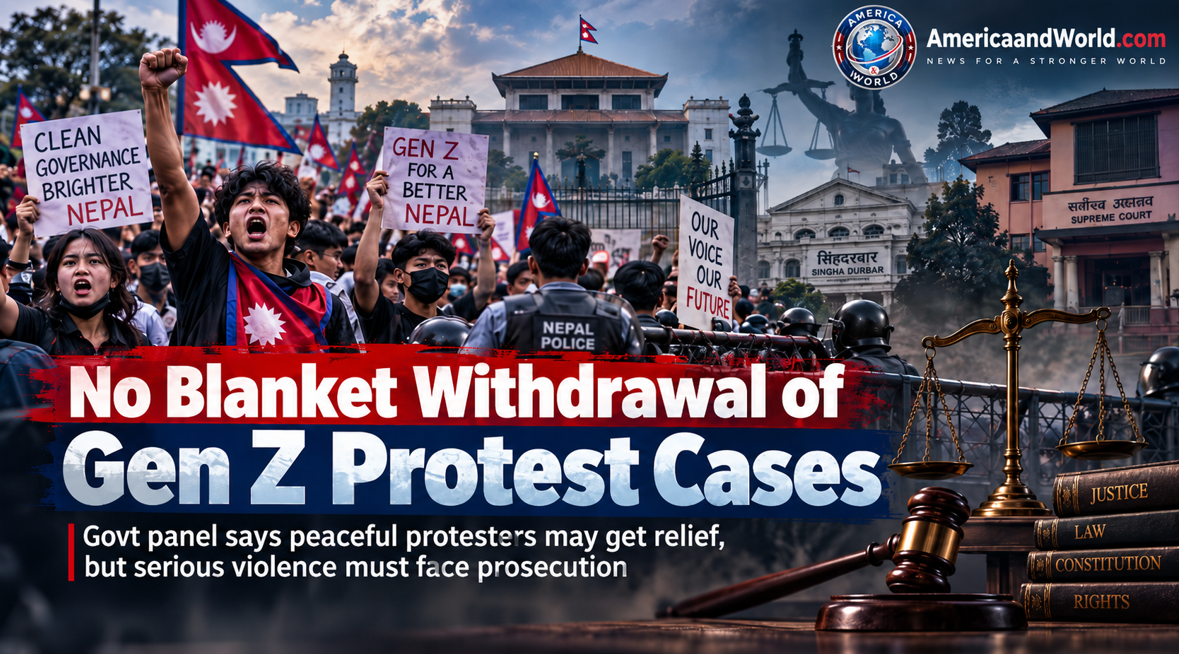
- Nepal Panel Rejects Blanket Withdrawal of Gen Z Protest Cases, Says Serious Crimes Must Face Prosecution
- Peaceful Protesters May Get Relief, but Violence and Arson Cases Should Continue: Government Panel
- Gen Z Protest Cases Must Be Reviewed Individually, Nepal Committee Says, Opposing Mass Withdrawal
KATHMANDU — A government-appointed committee has concluded that criminal cases filed in connection with Nepal’s Gen Z movement should not be withdrawn indiscriminately, recommending that peaceful protesters be treated differently from individuals accused of serious violence, arson, attacks on security personnel, weapons theft and destruction of public property.
The committee, headed by former judge Baburam Regmi, said cases brought solely against people for participating in demonstrations, chanting slogans or being present at protest sites could be considered for withdrawal where there is no evidence linking them to violence or other criminal activity. However, it stressed that serious offenses should not be dismissed merely because they occurred during a political movement.
The Cabinet on Monday decided to forward the committee’s report to the Ministry of Home Affairs for necessary action. Government spokesperson and Education Minister Sasmit Pokharel confirmed that the ministry will now examine the recommendations and proceed in accordance with existing law.
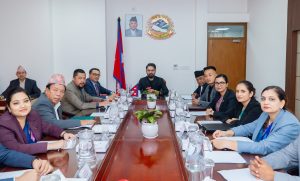
The three-member committee was chaired by former High Court judge Baburam Regmi and included former Deputy Attorney General Chetnath Ghimire and former Deputy Inspector General of Police Poshraj Pokharel. It was formed on June 20 and submitted its report to Home Minister Sudhan Gurung on October 1. The panel was tasked with reviewing criminal prosecutions arising from the Gen Z protests and determining which categories of cases could legally be withdrawn.
According to the committee’s findings reported by Nepali media, cases involving potentially fatal or serious attacks on security personnel, assaults on police posts, theft of government weapons, arson and major vandalism should not qualify for withdrawal. Allegations involving damage to sensitive state institutions, including the Supreme Court, Federal Parliament and Singha Durbar, were also treated as serious criminal matters rather than ordinary protest-related offenses.
The committee also examined cases in which evidence was considered insufficient, the financial loss had not been clearly established or the accused appeared to have been prosecuted mainly because of their presence at demonstrations. Reports indicate that roughly 100 cases could potentially qualify for withdrawal on such grounds, although the final decision in individual cases must follow the legally prescribed process.
The panel therefore rejected the idea of treating every prosecution arising from the Gen Z movement as identical. Instead, it recommended a case-by-case assessment based on the nature of the alleged offense, available evidence, the accused person’s individual role and the extent of damage caused.
For cases involving damage to privately owned businesses or personal property, the committee reportedly recommended that the government consider factors such as acknowledgment of responsibility, compensation to victims and the consent of complainants before considering withdrawal. This would distinguish certain property disputes from offenses involving weapons, attacks on security forces or serious threats to life.
At the same time, the report takes a more favorable position toward individuals who merely participated in peaceful demonstrations and against whom there is no evidence of involvement in violence, arson, looting or other criminal conduct. The committee’s approach suggests that participation in a political protest alone should not automatically result in criminal liability.
The committee also emphasized that the government cannot simply erase pending cases through a political declaration. Any withdrawal must comply with Nepal’s National Criminal Procedure Code and the existing government procedure governing state cases. Reporting on the committee’s findings notes that Section 116 of the Criminal Procedure Code restricts the withdrawal of many categories of serious criminal cases.
Where withdrawal is legally permissible, the government must follow the prescribed judicial process, including action through the prosecutorial authorities and the concerned court. A Cabinet decision by itself does not automatically terminate a criminal prosecution.
The central message of the Regmi committee is therefore clear: peaceful protesters and people accused of violent criminal acts should not be placed in the same category.
Cases arising solely from peaceful political participation may be reconsidered where there is no evidence of criminal conduct, but allegations involving attempted or actual killings, serious assaults on security personnel, attacks on police facilities, theft of weapons, arson, destruction of sensitive government buildings and major damage to public or private property should not receive blanket immunity under the banner of a political movement.
The committee has recommended that every case be assessed individually on the basis of evidence, seriousness of the alleged offense and the role of the accused, rather than withdrawing all Gen Z movement-related prosecutions through a single political decision.