The Federation of International Journalist, America (FIJA) Appeals to President Trump, U.S. Congress, Senate and American People for Expanded Humanitarian Assistance to Nepal


“Please Stand With Nepal, Help Save Lives, Find the Missing and Support Recovery and Reconstruction,” Khanal Urges Amid Catastrophic Flood Disaster
Washington, D.C. | September 1, 2026
Ram Prasad Khanal, President of the Federation of International Journalist, America (FIJA), has issued an urgent humanitarian appeal to U.S. President Donald J. Trump, the White House, the United States Congress, Republican and Democratic leadership, humanitarian organizations and the American people, calling for expanded U.S. assistance to Nepal following the catastrophic flood disaster that has devastated large parts of the country.
In a formal appeal addressed to President Trump at the White House on Tuesday, September 1, Khanal expressed deep appreciation for the humanitarian assistance, friendship and support already extended by the Government and people of the United States, while emphasizing that the scale of the disaster has created an extraordinary humanitarian emergency requiring substantially greater international support.
“Thank you, Mr. President. Thank you, America,” Khanal stated in the appeal, acknowledging the assistance already provided by the United States.
He warned, however, that the scale of human suffering and destruction remains overwhelming.
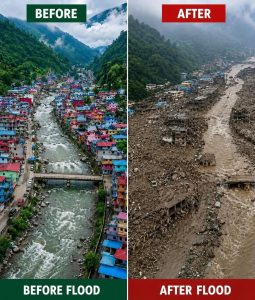
According to the appeal, more than a thousand people have reportedly lost their lives, thousands remain missing, and countless families are desperately searching for loved ones. Foreign nationals, including Americans and citizens of other countries, have also been affected by the disaster.
Entire communities have reportedly been destroyed or severely damaged, while thousands of survivors have lost homes, property, livelihoods and access to basic necessities.
Roads, bridges, communications systems and other critical infrastructure have also been swept away or seriously damaged, creating major obstacles for ongoing search-and-rescue, relief, medical and recovery operations.
The difficult geography and continuing weather-related challenges have further complicated humanitarian operations in the affected areas.
“At this critical hour, Nepal urgently needs stronger international humanitarian assistance, and continued American leadership can make an immediate and life-saving difference,” Khanal said.
Appeal for Expanded U.S. Assistance
In the letter, Khanal respectfully urged President Trump and his administration to consider significantly expanding American humanitarian assistance to Nepal.
The appeal identifies several urgent areas where additional U.S. support could have an immediate impact, including search-and-rescue operations, specialized rescue equipment, emergency medical personnel, medicines, field hospitals and medical support.
It also calls for assistance with food, safe drinking water, sanitation supplies and other emergency necessities for survivors.
Khanal specifically requested support for temporary shelters and displaced families, as well as helicopters, transportation and logistical capabilities needed to reach remote and inaccessible disaster-stricken communities.
Emergency communication equipment, disaster-response technology and technical expertise in disaster management and recovery were also listed among Nepal’s critical needs.
The appeal further highlighted the importance of international assistance in identifying victims, locating missing persons, supporting affected families, rehabilitating damaged communities and rebuilding essential infrastructure.
Looking beyond the immediate emergency, Khanal also urged the United States to support Nepal’s long-term reconstruction and efforts to strengthen national disaster resilience.
Appeal to U.S. Congress and Bipartisan Leadership
The appeal was not limited to the White House.
Khanal also called upon the Speaker and Members of the U.S. House of Representatives, the majority and minority leadership of the United States Senate, all senators, and Republican and Democratic congressional leaders to treat Nepal’s humanitarian crisis as an urgent matter.
He urged lawmakers from both parties to support additional humanitarian assistance for Nepal, stressing that the emergency should transcend partisan politics.
“This appeal transcends politics, parties, governments and national boundaries,” Khanal wrote.
“This is about saving human lives.”
Khanal said the tragedy must be understood through the suffering of ordinary families—the parents searching for missing children, children waiting for missing parents, and families hoping desperately for news of brothers, sisters, relatives and friends.
He also drew attention to survivors who watched their homes, possessions and livelihoods disappear within moments.
“It is about providing hope to people who have lost almost everything,” the appeal stated.
Nepal-U.S. Friendship Highlighted
Khanal emphasized the longstanding relationship between Nepal and the United States, describing it as a friendship developed through decades of diplomatic relations, development cooperation, democratic values, mutual respect and strong people-to-people connections.
He noted that generations of Nepalis have regarded the United States as an important friend and partner.
The FIJA president argued that this historic relationship gives additional meaning to American support during one of Nepal’s most painful humanitarian crises in recent history.
“Mr. President, Nepal needs America’s continued friendship, compassion, leadership and greater humanitarian support now,” Khanal wrote.
Appeal to the American People
Khanal’s appeal extended beyond the U.S. government and Congress to American civil society and the public.
He called upon humanitarian organizations, charitable foundations, faith-based organizations, businesses, medical institutions, Nepali-American organizations and other friends of Nepal throughout the United States to mobilize support for victims and survivors.
“Please stand with Nepal during this hour of extraordinary need,” he urged.
The appeal recognized the United States’ longstanding tradition of humanitarian leadership and its history of assisting communities affected by major disasters around the world.
Khanal said the people of Nepal would remember those who stood beside them during what he described as one of the country’s darkest and most difficult periods.
Focus on Rescue, Relief and Reconstruction
The central message of the appeal is that the humanitarian emergency is not limited to immediate rescue operations.
Thousands of survivors require food, clean water, shelter, medical care and basic services, while families of the missing continue to wait for information about their loved ones.
At the same time, Nepal faces the enormous challenge of restoring roads, bridges, communication networks and other essential infrastructure damaged or destroyed by the disaster.
The appeal therefore calls for a coordinated humanitarian response that includes immediate rescue and relief alongside medium- and long-term rehabilitation, reconstruction and disaster-preparedness assistance.
Khanal concluded the letter with a direct five-point humanitarian message addressed to President Trump, the U.S. government, Congress and the American people:
PLEASE STAND WITH NEPAL.
PLEASE HELP SAVE LIVES.
PLEASE HELP FIND THE MISSING.
PLEASE HELP THE SURVIVORS.
PLEASE HELP NEPAL RECOVER AND REBUILD.
The appeal was signed by Ram Prasad Khanal, President of the Federation of International Journalist, America (FIJA), Washington, D.C.
Copies of the appeal were also directed to the Speaker and Members of the U.S. House of Representatives, the majority and minority leadership and Members of the U.S. Senate, Republican and Democratic congressional leadership, the U.S. Department of State, U.S. humanitarian and disaster-response agencies, the U.S. Embassy in Nepal, American humanitarian and charitable organizations, Nepali-American community organizations across the United States, the American people and members of the media.
At a time when Nepal is confronting immense loss, widespread displacement and an urgent search for the missing, Khanal’s message to Washington is clear: the crisis requires not only sympathy, but immediate, expanded and sustained international humanitarian action.
For Nepal’s victims, grieving families and survivors, he said, additional American assistance could mean the difference between despair and hope—and, in many cases, between life and death.