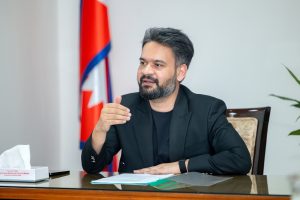
Israel Beyond the Headlines: Nepali Workers, Innovation and Everyday Life Amid Conflict


Despite persistent security threats, Israel continues to attract Nepali workers with higher wages, advanced agriculture, strong public systems and new employment opportunities
By Tanka Panta
(Written after returning from a visit to Israel)
Israel has become an increasingly attractive destination for Nepali workers. Getting there legally is neither simple nor guaranteed, and the country continues to face significant security risks, but for many Nepalis already employed there, the combination of wages, working conditions, technology and employment opportunities makes Israel markedly different from many traditional destinations for migrant labor.
During my recent visit, I met Nepalis working in different sectors and heard a recurring message: life in Israel cannot be understood solely through television images of rockets, military operations and regional confrontation.
One of them was Sange Tamang of Sindhupalchok, whom we met late in the evening while he was spending time with friends in Jerusalem. Tamang said he had not been in Israel very long, yet was earning what he described as roughly NPR 600,000 a month, while generally working five days a week.
That figure represents Tamang’s individual account and should not be interpreted as a standard salary for Nepali workers in Israel. Earnings vary substantially by occupation, overtime, contractual arrangements and deductions. Israel’s official minimum wage from April 1, 2026, is NIS 6,443.85 per month, or roughly NIS 34.64–35.40 an hour depending on the calculation of monthly hours.
“After working during the day, we come outside for an hour or two, meet friends and then go home to sleep,” Tamang told us.
I asked him the obvious question: Doesn’t it feel frightening to walk around at night in a country repeatedly affected by war and rocket attacks?
His answer was striking.
He said that in the areas where he lived and worked, restaurants and public spaces remained active late into the evening and people often continued with everyday life even amid heightened security. When authorities detect a threat, he said, warning systems and sirens direct residents to protected spaces or shelters.
The experience described by Tamang was echoed by several other people we met. Yet that sense of normality must not be confused with an absence of danger.
Israel’s sophisticated warning and civil-defense systems can reduce risk, but they cannot eliminate it. As of August 26, 2026, the U.S. State Department maintained a Level 3 — Reconsider Travel advisory for Israel because of terrorism and unrest, while advising against travel to some areas because of armed conflict. Nepal’s Ministry of Foreign Affairs had also advised Nepalis in Israel during heightened regional tensions to remain vigilant and follow local security instructions.
This contrast—visible normality alongside persistent security risk—was one of the most unusual aspects of our visit.
In Jerusalem, evenings did not necessarily resemble the image outsiders may have of a society permanently frozen by war. Restaurants were operating, families were outside and music could be heard in some public places. Israelis we spoke with repeatedly emphasized resilience and the continuation of daily life.
For Nepali workers, however, the strongest attraction remains economic.
Tamang argued that Nepal should expand safe and legal employment opportunities in Israel instead of forcing prospective workers to search for uncertain routes through third countries. He compared his experience with stories of Nepalis who spend years working elsewhere but struggle to save meaningful amounts.
His view reflects a larger debate in Nepal: rather than encouraging irregular routes, should the government negotiate more transparent government-to-government employment opportunities in higher-paying labor markets?
There has already been significant progress.
Nepal and Israel signed a framework agreement on the temporary employment of Nepali workers in specific Israeli labor-market sectors on September 30, 2020. An implementation protocol for auxiliary workers in long-term care institutions followed in January 2021.
The Israeli Embassy in Kathmandu stated in February 2026 that the agreement continues through automatic extensions unless one side terminates it. It also confirmed that the two countries were working on additional arrangements for home-based caregiving and agricultural workers.
The employment program continues to expand. In a 2026 selection process, 836 Nepali candidates were chosen through a lottery for caregiver positions, while Israeli officials said more than 2,100 additional caregiving opportunities were expected. Workers recruited through the bilateral mechanism are entitled to minimum salaries and employment conditions under Israeli law.
This is important because the safest path for Nepali workers is not an unofficial route through India or another third country, but a transparent process governed by bilateral agreements, immigration rules, worker protections and verified contracts.
Agriculture provides another extraordinary dimension to Israel’s story.
Travelling through parts of the country, it is difficult not to wonder how a nation with extensive arid and semi-arid land has developed such an advanced agricultural economy.
Israel has invested heavily in drip irrigation, precision agriculture, desalination and wastewater recycling. Government information shows that approximately 90 percent of domestic wastewater was recycled in 2022, much of it for agriculture and landscaping. Other official Israeli sources describe reclaimed wastewater as one of the country’s major agricultural water sources.
Large-scale seawater desalination has also become an important component of Israel’s water supply. The combination of desalination, wastewater reuse, irrigation technology and agricultural research demonstrates how water scarcity can drive innovation.
For a country like Nepal—with abundant rivers, fertile land, diverse climates and a large agricultural population—the comparison inevitably raises questions.
An Israeli agricultural specialist remarked during our visit that a country with Nepal’s natural resources should be capable of producing far more agricultural products, including for export.
Nepal does not need to copy Israel. Geography, economics, landholding patterns and social structures are completely different. But Israel’s experience does show the value of combining research, irrigation, technology, markets, infrastructure and long-term government policy rather than treating agriculture simply as traditional subsistence farming.
The relationship between Nepal and Israel in agriculture is already extensive.
Israel’s Embassy says more than 4,000 Nepalis had participated in the Learn, Earn and Return agricultural program by 2024, while another Israeli Embassy report says more than 4,000 students from farming families have received modern agricultural training in Israel since the program began.
The program allows Nepali agriculture students to combine academic training with practical experience. In February 2026, the Israeli Embassy said it was working to maintain and expand the program through partnerships with Nepali universities and colleges.
Nepal and Israel also signed an MoU on an Agriculture Center of Excellence on September 30, 2020, intended to support the transfer and adaptation of agricultural knowledge and technology.
The real challenge for Nepal is what happens when trainees come home.
Training thousands of young people abroad achieves little unless returnees have access to finance, markets, irrigation, land-use planning, cold storage, modern equipment and an environment in which agricultural entrepreneurship can survive. The skills acquired in Israel can become far more valuable if Nepal creates conditions that allow returnees to establish commercially viable farms.
Another feature of Israeli society that often attracts outside attention is military service.
Contrary to the impression that military service universally begins at age 16, Israel’s official information states that the legal obligation for regular military service generally applies from age 18, with differences in eligibility, duration and exemptions.
Whatever one’s view of Israeli security policy, the country’s security institutions are deeply integrated into national life, a reality that becomes immediately visible while travelling there.
Our delegation also visited hospitals, facilities for elderly people, museums, media institutions and areas toward Israel’s north and south. At the Ministry of Foreign Affairs in Jerusalem, we were introduced to a situation room, designed to monitor and coordinate responses to national and international emergencies.
Such centralized crisis-management systems allow officials to gather information, assess threats and coordinate responses during security emergencies, natural disasters or other major crises.
But perhaps nowhere is Israel’s complexity more visible than in Jerusalem.
With more than three millennia of recorded history, Jerusalem is sacred to Judaism, Christianity and Islam. UNESCO describes the Old City as possessing extraordinary symbolic importance to all three religions.
For Jews, the Western Wall is one of the most important sites of prayer and pilgrimage. Visitors often place written prayers between its stones.
For Muslims, Al-Aqsa Mosque/Al-Haram al-Sharif is among Islam’s holiest sites and is associated with the Prophet Muhammad’s Night Journey.
For Christians, Jerusalem encompasses places central to the life, crucifixion and resurrection of Jesus, including the Church of the Holy Sepulchre.
Walking through the Old City, one can move within minutes between places carrying enormous meaning for three world religions. Faith, history, identity, territory and politics overlap almost street by street.
Jerusalem therefore cannot be understood simply as an ancient religious city. Its political and legal status has remained one of the most sensitive and disputed questions in the Israeli-Palestinian conflict, and UN resolutions have long treated Jerusalem as a matter of international concern and final-status negotiations.
The origins of modern Israel are equally complex.
Jewish aspirations for national self-determination long predated World War II, but the Holocaust added unprecedented urgency to the search for Jewish security and statehood. Nazi Germany and its allies and collaborators murdered approximately six million Jews during the Holocaust.
After Britain referred the Palestine question to the United Nations, the UN General Assembly adopted Resolution 181 in November 1947, recommending partition into Jewish and Arab states, with a special international regime proposed for Jerusalem. Jewish representatives accepted the partition proposal while Arab representatives rejected it. Israel declared independence on May 14, 1948, followed by war involving neighboring Arab states. The conflict also produced mass displacement of Palestinians, whose refugee question remains central to the dispute today. Israel became a UN member in May 1949.
This history cannot be reduced to a single narrative. For Israelis, 1948 represents independence and national survival; for Palestinians, the events surrounding the war are remembered as the Nakba, or catastrophe, associated with large-scale displacement and dispossession. Any serious examination of the region has to recognize both the history of Jewish persecution and statehood and the enduring Palestinian experience of displacement and statelessness.
Amid that extraordinarily complicated history, Nepal occupies an interesting place in Israel’s diplomatic relations.
Nepal and Israel established diplomatic relations on June 1, 1960, and Nepal became the first South Asian country to establish formal diplomatic relations with Israel. Prime Minister B.P. Koirala’s 1960 visit played an important part in building the relationship.
Over the decades, cooperation has included agriculture, training, education, water management, technology, development assistance and employment. Israel also assisted Nepal in the aftermath of the 2015 earthquake, while bilateral agricultural programs have trained thousands of Nepalis.
Before our delegation travelled to Israel, Israeli Ambassador to Nepal Shmulik Arie Bass emphasized the longstanding friendship between the two societies. The continuing cooperation between the two governments suggests there is considerable room to expand legal employment, training and technology transfer.
For Nepal, however, the important lesson from Israel is broader than employment.
A country does not become developed simply because it possesses natural resources. Development depends on institutions capable of converting resources into productivity, technology into opportunity and policy into implementation.
Israel faces water scarcity, security pressures and repeated regional confrontation, yet it has invested heavily in science, agriculture, crisis preparedness and public infrastructure. That does not mean every Israeli policy should become a model for Nepal, nor does technological achievement erase the serious political and humanitarian controversies surrounding the region.
But there are lessons worth studying.
Nepal possesses extraordinary natural advantages: water, fertile land, climatic diversity, tourism potential and a large young population. What it has too often lacked is the sustained system required to connect those advantages with research, investment, accountability, markets and implementation.
The Nepali workers I met in Israel expressed essentially the same message in another form: if Nepal cannot immediately create sufficiently remunerative jobs at home, it should at least negotiate safe, transparent and legal pathways to markets where Nepalis can earn, learn and eventually return with savings and skills.
And when they return, Nepal must give them a reason—and an opportunity—to invest those skills at home.
That, perhaps, is one of the most important impressions I carried back from Israel: even amid conflict and uncertainty, institutions, technology, preparation and a functioning system can profoundly shape everyday life.
- Email: [email protected]